How Aiken County permitted development activities that led to road closures.
by Don Moniak January 11, 2024
On two occasions in the Fall of 2024 , the University Parkway (Hwy 118) portion of Aiken’s bypass was temporarily closed at its junction with Vaucluse Road. While the official reason for the closures provided by government officials was flooding, a better term would be “debris flow,” as heavy soil erosion caused by major rain events led to the road being covered with sandy sediments that posed an unacceptable risk to public safety.
The first incident occurred after approximately 8.0 inches of steady rain over a 24-hour period— Hurricane Helene and the “predecessor” rain event—fell from September 26-27. The second incident was on November 6th following close to five inches of rain in about a 12-hour period. According to a Department of Transportation report, the cause November 6th closure resulted from sediments that accompanied a stormwater detention pond failure that was under construction.
In both instances, the sandy debris originated from a housing construction site known as Highland Bluffs, where a subdivision of 110 single-family homes is under development, and 116 townhome-style apartments are scheduled for a second phase of development (Figure 1). The developer, Highland Bluff LLC, is operating on a relatively steep slope that was has been described by Aiken County Administrator Brian Sanders at a County Council meeting as “precarious.”
In April 2023, the Aiken County Planning Commission gave the developer preliminary plat approval for the single-family residences. The resolution any identified issues, including any that might be raised by the county’s engineering staff, was required before construction could begin. All of those contingencies were resolved by April 2024.
Construction began in May 2024. The heavily forested site was clearcut except for 10 to 15-foot forested buffers along the two roads bounding the site preparation work. Intensive grading ensued to prepare the site for high density housing.
According to County inspection reports*, problems quickly emerged in May and June that plagued the site all summer. The chronic issues included torn silt fences, an entrance that needed constant maintenance to prevent sediment from leaving the site, and soil erosion via strong winds resulting in sediments “leaving the disturbed area.” There were also “drink bottles/trash found in several areas” in May and “all over” the site in July.
In July, the county inspector reported (Figure 2) that lack of maintenance was allowing sediment to leave the site via swales (drainage ditches) in the site right of way entrances; and that the detention pond that was under construction was lacking riprap (stones placed on the shoreline to prevent erosion), a skimmer (to drain only the topmost, sediment-free layer of water), and slope stabilization. In addition, the catch basins were holding sediment, but sediment was also “leaving the site via a culvert.”
Figure 2: Portion of August 2024 county inspection report.
After a wet July that included at least one rain event of more than three inches, the inspector added that, “many slopes will need to be repaired. Issues along Vaucluse Road need to be addressed.”
By the end of a drier August, water erosion was again replaced by wind erosion that settled fine dust on neighboring properties, the culvert at the entrance was missing riprap, the detention pond still lacked erosion controls, and “both construction entrances (were) allowing sediment to leave site via swales in ROW.”
Figure 3: Before After Figure 4: September 28, 2024 road closureLooking east at Road Closure with sediment across road
Not a single local media source accurately cited the reason for the closure, leaving the misimpression that it was floodwaters that caused the closures, not a debris flow.
At Aiken City Council’s November 12th meeting, Aiken Public Safety Chief Charles Barranco confirmed the latter road closure stemmed from “debris from the property above the road.”
At County Council’s November 19th meeting, the issue was raised during the public comment period. County Administrator Brian Sanders also confirmed the closures stemmed from sediments originating from the Highland Bluffs construction site, and cited the detention pond construction as the primary source.
In response to subsequent questions raised by Council members PK Hightower and Kelly Mobley, Sanders also stated that “they have a right to develop their property,” and that “they are doing everything right.”
However, the County’s inspection records suggest that the County’s own guidelines legal guidelines for site preparation were arguably not met in this instance.
According to Section 19.5-23 of the County Code, these measures include the use of “temporary plant cover, mulching, and/or structures to control runoff…during the period of development or land use change,” disturbing the smallest area practical at any one time, retaining natural vegetation and saving topsoil, and provisions to “effectively accommodate the increased runoff caused by the changed soil and surface conditions; i.e. diversion ditches, grassed or surfaced water-ways and outlets, enlarged and protected drainage channels.
This is not the first new subdivision in North Aiken to suffer from excessive soil erosion during the site preparation phase that impacted neighbors and affected public safety. Similar dust storms originating from the Portrait Hills subdivision in early 2023–permitted by the City of Aiken—covered neighboring homes and businesses with a fine layer of gritty dust and sand and created visibility issues on Highway 19 North.
The lesson learned is that the promises made by local government to concerned neighbors regarding new developments should certainly be treated by concerned citizens with a dose of healthy skepticism.
On July 8, 2019, Aiken City Council met for their bi-weekly work session. According to the meeting minutes, the session opened with City Manager Stuart Bedenbaugh informing Council that “this morning Kyle Hartley, an employee, was hit while he was working on the back of a solid waste truck. He is in the intensive care unit at University Hospital. He asked that we keep him, his family and his co-workers in their thoughts and prayers.”
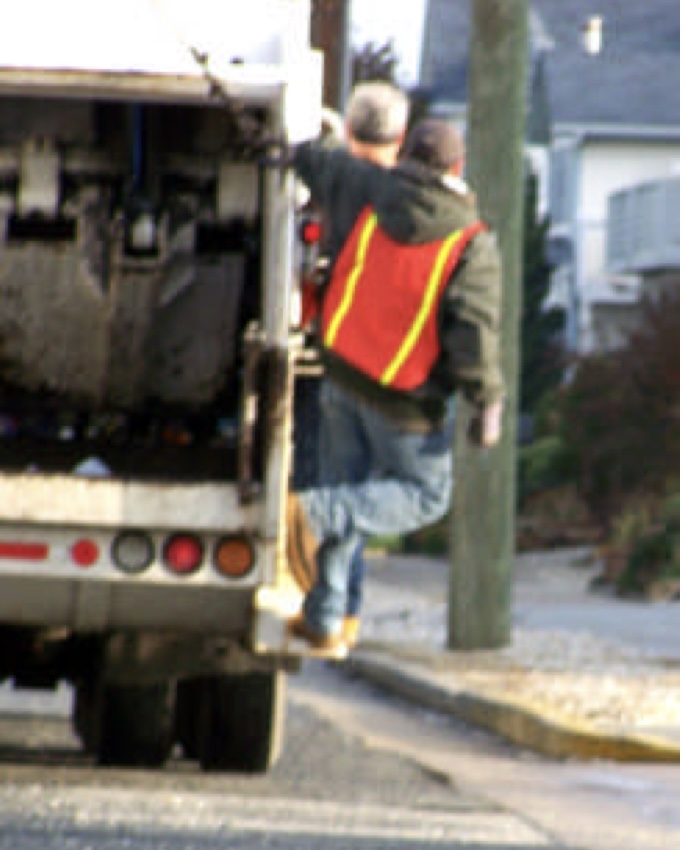
According to two separate but nearly identical lawsuits (1) filed eight months after the accident by both of his parents, 17-year-old Kyle Hartley’s injuries from that day—when he was assigned to work the back of a garbage truck without any training and in defiance of his parent’s wishes—included a severed right leg, mangled right arm and right side of his face, and back and brain injuries; “among other serious and permanent injuries.” Ultimately, Kyle Hartley’s right leg had to be amputated.
The accident happened on one of the busier stretches of York Street, along the same curve where, in 2014, a driver struck two pedestrians who were walking peaceably on the sidewalk—killing one of them. In this case, the truck and Hartley were struck by a minivan.
According to a story by WRDW News of Augusta, three pedestrians had been struck by vehicles in the previous year, Aiken Public Safety warned that drivers “forget that York Street is a major highway,” and “Aiken’s city manager says he’s noticed the high volume of accidents out on York Street and is working with SCDOT to see if anything can be done to stop the speeding and reduce the accidents.”
York Street was definitely a more dangerous setting for traditional trash pickup involving workers riding on the rear steps of rear-loading trucks; and a much better candidate for the only single-operator, automated garbage truck the city owned and operated at the time. But for whatever reasons, one of the three older style models was operating on that stretch of road, and an inexperienced 17-year-old minor working at a seasonal job happened to have been improperly assigned the task of riding the rear step and assisting with unloading trash bins.
Later that evening, at the tail end of the Council’s regular meeting, Mayor Rick Osbon asked again that the city “hold our young employee who was injured today in our prayers and his family, and the crews who were working with him.”
The Mayor’s comments followed a brief tribute to the city’s safety record, during which Mr. Bedenbaugh described payments back to the city from its insurance fund, the South Carolina Municipal Insurance and Risk Fund (SCMIRF).
“Mr. Bedenbaugh stated that ‘Aiken belongs to the Municipal Insurance Pool. The Cityreceived a surplus check of $144,689 due to the overall favorable performance of the city employees. We were notified that the City can expect to receive a check in June 2020 for $144,458. The City of Aiken was one of the founding members of the Insurance Pool in the early 1980s. It has paid dividends a lot of years…,I would like to complement our Risk Manager, Lex Kirkland, and our supervisors and department heads. They take safety seriously.”
If there were any objections from Council to the lauding of the city’s safety record on the day of an accident in which the City’s safety system clearly failed at a massive scale, the meeting minutes and video of the meeting do not reflect concerns about the contrasting messages.
Aerial view of long curve on York StreetThe long curve on York Street
Nearly five years after the insurance rebates were announced, and four years after lawsuits were filed, Attorney David Morrison, who is representing the city but is apparently being paid by SCMIRF—which has a coverage limit of $1 million per claim and can rescind legal defense if that limit is reached (2)— filed a Motion for Summary Judgement in the Hartley vs City of Aiken cases.
The Motion came more than four years after the two Complaints that were filed by Kyle Hartley’s parents, Kristi and Keven Hartley, who sought redress through the courts for lost income, medical expenses, and mental anguish; with their attorney Jason Samuels (of the Samuels Reynolds Law Firm of Columbia) contending that:
“Plaintiffs [have] also suffered extreme mental anguish from the moment [they] became aware of [their] son’s accident and medical condition, watching as [their] son has endured the amputation of his right leg, many surgeries and during the process of caring for [their] son and making medical decisions directly effecting [their] son’s future.”
The Plaintiffs cannot establish that their claims of harm from emotional distress were caused by the City’s actions.
The City is protected by sovereign immunity.
The state’s Worker’s Compensation Act prohibits the Hartleys from recovering damages.(3)
There was no “objective significant physical injury as a result of the alleged emotional distress” to support their claims.
(The Motion was scheduled to be heard on August 21, 2024, but was continued until the next available date.)
From Prison Labor to Modern Trash Collection
In many ways, the Hartley case is more than eight years old; beginning at the end of the City’s decades of access to cheap, almost free, state prison labor for use in garbage collection. That reliance on prison labor was, arguably, one root cause of the Hartley accident. (4)
In March 2016 the State Department of Corrections announced it would be closing the Lower Savannah River Early Release Center on Wire Road. The Center had long provided prison labor to local governments for use in menial tasks such as litter pickup, sorting at the City of North Augusta’s recycling center, cleanup at the Aiken County Animal Shelter, landscaping and grounds maintenance, and riding the back of rear-end loading garbage trucks for the City of Aiken’s public works department. In total, approximately 100 early-release inmates worked across the county; 35 of which worked for the City of Aiken.
The cost to the City was $15 per day, or about $4,000 per worker per year, amounting to less than $25,000 for the four to six inmates used daily for trash pickup and less than $100,000 for the eighteen inmates who worked on landscaping operations. The replacement cost for hiring ten temporary workers for the entirety of Public Works was about $250,000–a figure that included replacing the inmates with only ten temporary workers. Instead of hiring full-time workers, the City opted for the next cheapest option to prison labor—which also guaranteed a less experienced workforce and chronic labor shortages.
For the next three years following the work release center closing, the City slowly charted a path forward from the prison labor workforce model to a safer, modern model involving robotic garbage trucks.
Kyle Hartley got caught in that transition from three-person trash collection crews involving prison-labor to a single-operator system utilizing automated garbage trucks. The labor shortages wrought by the use of low-paid temp workers contributed to the misguided decision by city management to place him in the knowingly dangerous position on the back of a garbage truck; one known to have a high rate of workplace fatalities as well as chronic injuries.
Hartley was a 17-year-old minor hired as a seasonal worker in the Public Works Department; what was to be a summer landscaping job before heading off to college. At the time of his hiring, there was only one single-operator truck and 3-4 rear-loading trucks requiring manual operations from a crew riding the rear of the truck.
When he was assigned to garbage truck duties in defiance of parental guidance, the hazards of riding on the back of rear-end loading trucks were well established; yet he was told to ride on the back of a truck without any training.
The small fleet of three new, remote-loading, single-operator trucks arrived just a few months after he suffered his debilitating injuries.
According to the meeting minutes for work sessions from 2016 to 2019, City Council and City staff discussed and debated the merits of upgrading the garbage truck fleet versus staying the course. The former Public Works Director Tim Coakley urged the latter, while former City Manager John Klimm was the first to advocate for the former. Following are the highlights of those meetings. In all but a few cases when Klimm was manager, the discussions centered on costs and efficiencies, not safety.
May 9, 2016: City Manager John Klimm discussed an operational audit of the Public Works department, stating that “we are just about to get into another round of purchase of garbage trucks, and the question is whether this is the time for us to take a look at some of the technological changes that have occurred over the last 5 or 10 years such as robotic trucks and that type thing. With the news about the possibility of losing the inmates, we have an even more interesting aspect. The first phase of the study, which is in draft form, does show there would be cost savings. There would not be huge cost savings because the new trucks cost a lot of money.”
Public Works Director Tim Coakley explained how “the state had closed us off from inmates a couple of weeks ago and shipped them to the Trenton (correctional) facility,” and that “$250,000 had been placed in the Public Services budget for temporary labor for next year.”
City Manager Klimm described the status of the Public Works audit, describing again how, “Many, many areas across the country have gone to robotic trucks…He said we have three people on each truck currently while other areas have one person on the robotic trucks. He said the bottom line is there was merit in looking seriously at robotic trucks. The savings were relatively modest, but when you put in the fact that inmates are not going to be available anymore, then it substantially changes things.”
Public Services Director Michelle Jones made the case that the City should take a phased approach to upgrading to robotic trucks that require only one driver-operator. She also raised the issue that modern automated trucks “would eliminate two potential risks” by replacing three-person crews per truck and going to one person per truck.
John Klimm also spoke about safety, stating that “traditionally worker’s comp claims are high for cities for garbage collection employees, but this is not the case in Aiken at this time, but could be in the future…there is concern about the present system where two employees hold on to the back of the truck. There is concern about their safety.”
Council opted to add the purchase of a single robotic garbage truck to the budget.
There was another discussion about the garbage collection labor situation and the existing fleet of trucks; with complaints regarding increased labor costs continuing two years after the loss of prison labor. The discussion focused on efficiency and costs.
At one point, Councilman Dewar asked about the experience with the single-operator automated truck. City Manager Stuart Bedenbaugh replied that “it is working, but City-wide, it would be difficult to implement because of some of the tight spaces in older neighborhoods with a lot of old-growth trees and above-ground utilities.”
Mayor Rick Osbon then stated the single-operator trucks “work in Aiken Estates and Gem Lakes;” two neighborhoods with substantial tree canopies.
At the end of the discussion, Tim Coakley stated that he “would not recommend purchasing another single-operator truck. “
Tim Coakley addressed the single-operator system, stating, “It has not performed as staff would like. There have been several breakdowns in the first year…there are a lot of neighborhoods where the one-man truck cannot be used.” He pointed out that the truck “cannot run in Kalmia Hill as it is too tight and there are a lot of cul-de-sacs.” He also described residents “not putting cans out correctly” as another disadvantage for a single-operator system.
When Councilman Ed Woltz inquired as to the cost of new equipment, City Manager Bedenbaugh responded with a figure of $1.4 million.
City Manager Bedenbaugh informed Council that there were enough funds in the Depreciation Account to replace four trucks. The subsequent budget approved for Fiscal Year 2019-2020 contained funding to buy four new single-operator, automated garbage trucks.
One week into the new budget year, Kyle Hartley suffered his injury while riding on the back of one of the old garbage trucks.
July 8, 2019:
Mention is made of the Hartley accident and injuries, with thoughts and prayers offered.
Lex Kirkland, who had recently replaced Tim Coakley (5) as the Public Works Director, told Council that three new single-operator trucks had been purchased and were in use, and that “the process is getting faster every day. (Crews) hope to pick up more than they were able to pick up with the rear loaders as they get used to them…citizens are becoming accustomed to putting the cans out correctly.”
Year and value of three Peterbilt automated, single-operator garbage trucks approved for purchase by City Council in June 2019, and purchased in 2019 after the July 8, 2019, Kyle Hartley accident. From: City of Aiken’s 2022 Insurance Coverage Contract with the South Carolina Municipal Insurance and Risk Fund (SCMIRF), a division of the Municipal Association of South Carolina (MASC). The inventory shows one 2004 model rear-end loading garbage truck remains in the fleet as a backup.
Footnotes
(1) The case file in sccourts.org is skimpy. For example, there are no portions of the deposition transcript associated with any Motions, and there are no Memorandums in Support of or in Opposition to the May 2024 Motion for Summary Judgement. The most recently scheduled hearing was deferred to a future date.
(2) Like many other personal injury cases asserting negligence or other undue actions on the part of the City, injured parties are more likely to face its insurer, South Carolina Municipal Insurance and Financing Fund (SCMIRF).
SCMIRF, though, is not actually insurance, nor is it subject to state insurance laws.
The City of Aiken’s insurance coverage for property and liability through SCMIRF is described in the city’s policy as:
“a statutory pooled self-insurance liability fund established pursuant to Section 15-78-140 of the South Carolina Code and by intergovernmental agreement. By statute, SCMIRF is not insurance, nor is it subject to state laws regulating insurance. Nevertheless, Section 15-78-140 requires SCMIRF to provide multiple lines of coverage.”
The following question was posed during a February 2023 City Council meeting following the publication of an Aiken Chronicles update on the case.
“Who pays the attorney costs for these personal injury cases against the city? Is it the insurance company or is the city? Is it the insurance companies that hire the lawyers for personal injury cases that are going to involve possible settlements greater than a hundred thousand dollars?”
City Attorney Gary Smith answered,
“Don’t hold me to this. The city manager would be able to answer this question better than I can. But we do have insurance through the municipal Insurance risk fund and there are cases from time to time where they will take up the cost of litigation and they’ll take up the cost of the Judgment if there is one. There are some cases where the city has to fund its own legal expenses. I believe this is one being funded by MIRF but I can’t promise you that.”
A FOIA request for all of David Morrison’s legal invoices to the City of Aiken for 2022 and most of 2023 revealed no billings for the Hartley case. SCMIRF is clearly picking up the bill.
This makes perfect sense, as the City’s insurance policy states that “SCMIRF has the right and duty to defend any Suit asking for Money Damages.” (below)
Click to enlarge.
The General Conditions clause further states that “it is agreed that SCMIRF shall make all final decisions regarding the legal defense of claims, regardless of whether the Member elects alternative premium financing option, including but not limited to a deductible or individual self-insured retention.”
What is unclear is to what extent SCMIRF has the final say on settlements.
A major settlement or jury award could temporarily trigger the end of SCMIRF’s duty to defend or settle future lawsuits. According to the City’s 2022 Insurance Coverage document, “SCMIRF’s liability for any one Incident is limited to $1,000,000 per Member.”
As reported in Fencing After the Fact, the City’s self-insurance is for up to $100,000 per incident.
The City of Aiken should identify its role in the decision-making on a final settlement should be identified.
Should the case go to jury, the City and SCMIRF are undoubtedly aware that two recent jury awards to prisoners injured while at the Aiken County Detention Center have added up to $1.1 million. Jurors are much more likely to be symphathetic to the plight resulting from horrific workplace injuries suffered by a healthy, 17-year seasonal landscape work unnecessarily performing dangerous trash collection duties.
(3) The Civil case has crawled through the judicial system for more than four years while Kyle Hartley’s concurrent, complex worker’s compensation case was litigated.
SC Worker’s Compensation law, SC 42-9-10, requires workers with “total disability” to receive two-thirds of average weekly wages for up to 500 weeks. If the disability is partial, it would be for up to 340 weeks.
If the injured worker becomes paraplegic or quadriplegic, or who has suffered from brain damage, then the benefits are for life.
No matter what the case, the benefits for Kyle Hartley would be scanty.
If his wage was the current starting pay of $11.50 per hour, a worker’s compensation payout would be only an estimated $308/week.
If his wage was ~$9.50 per hour, which was typical at the time, the payout would only be $254/week, or merely as much as $125,000 and as little as $86,000 for the loss of a leg while performing work for which he was no trained.
How Aiken City Council, a Developer, and Public Safety sparred over less than an acre of land. The Developer won round one.
by Don Moniak July 2, 2024 (Updated* July 5, 2024)
On Monday, June 26, 2024, , Aiken City Council voted 5-2 to give initial approval to a 38-acre residential subdivision that is a part of a larger, 49-acre development called Rutland Place. The approval included a Zoning Ordinance waiver for building separation on 16 acres of the property where single-family detached homes are proposed. The waiver will allow the developer to locate two-story homes within fifteen feet of each other instead of the minimum of twenty feet required by ordinance.
Aiken Public Safety and the City Fire Marshall had expressed objections to the waiver months ago, and continued to express objections and concerns—which were also documented in the Planning Commission’s recommendation Memorandum to Council. Following a 37-minute discussion between Public Safety, the Developer VIP Riverside, and Council, the waiver was approved. In doing so, firefighter safety and fire protection took a back seat to the economic demands of a housing developer.
The subtraction of the five feet of separation that would provide a safer space in any necessary firefighting efforts amounts to less than an acre of land for the developer, or about 2-3 homes. For firefighters, it is a loss of five feet of safe space in an already tight firefighting environment.
by Don Moniak July 2, 2024
by Don Moniak
In December 2022 Aiken City Council approved a 330-unit residential subdivision named “Aiken Village.” The proposal involved 68 build-to-rent, single-story, multi-family story, townhomes with a total of 330 housing units on a 49.3-acre tract bounded by Rutland Drive and Hwy 19 North (Edgefield Highway).
That project was pursued by the owner of the property, North Augusta based VP Riverside, LLC. The company’s plan was to obtain approval for the plan and then sell the property to a developer, but the project never moved forward.
Instead, VP Riverside came back with a new plan this year, one that provides both a new residential subdivision and commercial development across from Aiken High School that is more appropriately named “Rutland Place” (Figure 1). Once again, VP Riverside is seeking the less typical process of seeking approval from City Council and then selling the property with its plans to a developer.
Figure 1: Location of proposed “Rutland Place” development, also showing Aiken High School. As described in “This is Wrong for That Property,” the area endures heavy traffic during peak hours, which can inhibit emergency response times.
Like Aiken Village, the Rutland Place development requires rezoning and Concept Plan approval for two separate but connected plans. The property is not being subdivided. There will be two zoning designations within the same 49.3 acres. Therefore, two approvals by City Council are necessary for the same property (see pages 261 to 340 of the 6/24/24 City Council agenda packet for information on the First Reading of the Public Hearing to provide initial approvement of the project).
First, a rezoning to Planned Commercial (PC), and an associated PC Concept Plan, for an 11.4-acre portion of the tract; where a Tractor Supply store and up to five other yet-to-be-named businesses are planned.
Secondly, a rezoning to Planned Residential (PR), and an associated PR Concept Plan, for the remaining 38-acre portion of the property. There, the proposal is for 210 single-family, detached, two-story homes (two-family townhomes) on 22.4 acres, and 59 single-family, detached homes (Figure 2) on 15.6 acres—an overall housing density of 7.1 units per acre.
Figure 2; Rendering of single-family detached homes proposed for Rutland Place, across from Aiken High School. The developer has sought a building separations waiver for the 59 home, 15.6-acre portion of the larger 49.3-acre development, of which 38.0 acres is residential and 11.3 acres is commercial.
In its development application, VP Riverside requested a waiver for the 59 detached single-family homes, asking for 15 feet between homes instead of the minimal 20 feet set forth in the Zoning Ordinance. The difference involved with the five-foot waiver, area wise, is at most three-quarters of an acre.
As a justification for the waiver, VP Riverside cited a correlation between increased home density and home affordability, and claimed the plan was more in line with Aiken’s Comprehensive Plan’s guidance for improved walkability—itself an interesting argument since a waiver was also being granted to remove a section of sidewalk.
Although the Planning Commission had voted 5-0 to recommend the developments, it did not recommend the buildings separation waiver. In its memorandum to City Council (pages 305 to 313), the Commission cited concerns raised by the City Fire Marshall and Aiken Public Safety during the earliest stages of the approval process; concluding that VIP Riverside should comply with the building separations provision of the ordinance. Specifically, the memo read, in part,that:
“Zoning Ordinance Sec 4.2.6.E states that no single story building shall be erected within 15 feet of any other single story building and no multi-story building shall be erected within 20 feet of any other building. The (applicant’s) project narrative requests a waiver to establish an alternative standard 7.5’ side setback. The Fire Marshal has commented that Public Safety is opposed to the setback request waiver which would allow detached side setbacks at 7.5’, which allows for 15’ between homes, due to concerns with exposure fires and firefighter safety.
Public Safety requests adherence to the minimum building separation depicted in the Zoning Ordinance. Approval should include a condition that the required building separations be met per the Zoning Ordinance.” Approval should include a condition that the required building separations be met per the Zoning Ordinance.” (Original underlined emphasis).
The process leading to City Council’s June 24th decision to waive the building spacing requirement was confusing, complex and legislatively untidy, as this 6/28/24 letter to Mayor Teddy Milner and City Council illustrates.
The lengthy waiver debate began just as Council was about to approve the project, which itself had involved a 20-minute discussion. At that point, VP Riverside co-partner and former North Augusta City Manager Todd Glover returned to the podium and stated “I need to have the waiver more definitive.”
A 37-minute discussion (beginning at the 2:07:00 mark) ensued that culminated in a 5-2 vote to approve the project and the waiver, with Mayor Teddy Milner and Councilman Ed Woltz dissenting.
Five feet may not seem like much, but Public Safety and the City’s head Building Inspector explained the justification for the minimal spacing requirement—firefighter safety and defense of adjacent structures in the event of a fire.
Building Inspector Mike Jordan, who has extensive firefighting experience himself, and Aiken Public Safety Captain Brian Brazier, who also serves as the City’s Fire Marshall, took turns explaining why five feet is important.
Jordan explained that the 20 feet of spacing was necessary to keep any fire from more easily spreading from the area of origin to more structures; keeping the fire within a single structure. He stated, in part, that:
“I can tell you personally, on the ground, (five feet) is a lot, especially with multi-story structures. If we need a ladder, that distance is critical. The police department years ago worked with that (ordinance process) to establish those separations for protection from fire, to try to isolate to individual structure and keep the fire from burning up multiple homes.”
That latter effort resulted in a higher standard in Aiken than in other municipalities like North Augusta—whose Development Ordinance only requires ten feet between homes for “small lot” and “medium lot” housing developments.
In defense of the waiver, Mr. Glover (Figure 3) made two interesting arguments. First, he somewhat denigrated his firm’s now defunct Aiken Village Concept Plan by stating that “I think the 330 town homes that we crammed in there the first time was maximizing the density.” (The plan actually called for 330 multifamily units across 68 single-story townhomes).
Then he cited his own experience as a resident of North Augusta’s Hammonds Ferry neighborhood, where homes are often separated by only ten feet within a grid with very narrow streets that makes firefighting even more challenging—essentially suggesting that Aiken should set a precedent of lowering its standards to that of North Augusta’s.
APS Captain and Fire Marshall Brian Brazier then provided another justification for the 20-foot rule, that home interior materials, as well as some home construction materials, can and do burn hotter and faster than in the past:
“I said when we first started this we are charged with protecting life and property with the understanding that a fire in a residence in today’s world flashes in three to five minutes, which means the whole room is consumed that rapidly due to the type of materials we’re putting in our homes.
As we keep building these houses closer together it’s going to get worse. I mean it’s proven science that fires flash quicker they burn hotter than they ever have before, because of the materials that we’re putting in them, and that’s why some of of this separation is in place to keep our people safe but to protect property.”
One summary of the science from 2016 describes and illustrates research by UL Laboratories that concludes that commonly used modern building materials and most modern home furnishing are generally more conducive to fire spread, adding that, “Research shows that 30 years ago, you had about 17 minutes to escape a house fire. Today it’s only 3 or 4 minutes.”
Aiken Public Safety Chief Charles Barranco was the final speaker, and expressed support for his Captain and the Building Inspector Jordan, while issuing a warning to City Council that it would be setting a precedent for future developers. He stated, in part, that:
“The Captain is right, as fires burn faster hotter and time is always an issue to um to try to put that fire out….we have about 40 to 45 fires true fires a year and getting them when they are very small is happening less and less. So we wanted to bring you the information because I’m not that aware that planning or the building official or anybody from Public Safety has ever waived these (requirements) before…whatever you decide you are setting a precedent.”
Council then discussed the situation before approving the waiver with the 5-2 vote, with the usual perspective that “we need the housing” being the higher priority.
But in this case, the amount of additional housing is negligible, about three homes in a 259-unit subdivision. Council spent nearly forty minutes haggling with its own Public Safety leadership over less than an acre. It then chose to grant an exemption to the City’s higher minimal standards for fire protection, putting the demands of the property owner and future developer before the safety of its own firefighters and over the objections of Aiken Public Safety and its Planning Commission.
Screenshot
Figure 4: Aiken Public Safety Chief Charles Barranco and APS Captain and Fire Marshall Brian Brazier speaking to Aiken City Council on 6/24 in support of maintaining a safer distance between homes. From archived City of Aiken You Tube livestream video.
Footnote
* Following is additional information from the draft meeting minutes. It is rare to anomalous for minutes to not be approved as final.
a. Regarding the final vote:
“Councilwoman Price moved, seconded by Councilwoman Diggs, that Council approve on first reading an ordinance to rezone 38 acres located at Rutland Drive and Laurens Street to PR (Planned Residential) and approve the concept plan with the conditions recommended by the Planning Commission and grant a waiver of 5’ from 20’ to 15’ for the distance between two story structures. The motion was approved by a vote of 5 in favor and 2 opposed. Mayor Milner and Councilman Woltz opposed the motion.”
Council members in favor were Lessie Price, Gail Diggs, Kay Brohl, Andrea Gregory, and Ed Girardeau.
b. There is an anonymous assertion on the comments section that the developer will be “Using ALL non-combustible products.”
This is an inaccurate statement. As the meeting minutes (pages 37-38 of the file) accurately reflect, the developer’s representative stated an intent to use non combustible materials, he did not commit to that approach, and left the door open to future changes. The representative also declined to disclose the name of the developer, which would enable Council and staff to investigate its track record.
The draft minutes state:
Bryan DeBruin, 16 Wellington Avenue, Greenville, SC, stated he represents the development group. They will purchase the property and intend to develop it. Regarding the specific question regarding the fire rating, we do infill development in four different counties now.
On the multi- family side, we do that. We have not had to do that on a residential home. We consider both single-family attached, townhomes as well as the attached product to be residential so they would not have sprinklers. They would meet the residential building code standards.
While it seems like a really easy fix just to create a higher standard on the rating, from a building perspective and affordability component every time you make a change to this product and every time you make a change to the home, there are a lot of other what ifs that happen such as the supply chain, etc.
He said he would be concerned and would not be able to give that assurance because we don’t know if we could do that and where that would go. It might be a harder hardship for the construction of the home to do it that way than it would be for the reduction of lots.
He said they were real excited. This will be our first project in Aiken. The advantage of this is that you get to balance density with the townhomes, with the single-family, and the attached product and that is not all one thing. When it comes all of one thing, either you are over dense or you are under dense and you are priced out a considerable amount of your residences. Having this waiver and variance on just the single-family detached aspect allows them to meet the density obligations that they will have to make for it to make sense financially while also delivering something that they will be proud of and the City will be proud of as well.”
Aiken County’s downtown judicial center is being modernized and growing beyond the historic courthouse at Chesterfield Street and Park Avenue.The decision to expand downtown, instead of building anew on the edge of town, will result in substantial taxpayer savings, preserve the traditional use of three historic buildings, and maintain downtown’s private legal culture.
Aiken County Council approved the purchase of the City of Aiken’s former Municipal Building at 214 Park Avenue, SW, for use as the County Solicitor’s Office in December 2023; Aiken City Council gave final sale approval on January 22, 2024.
Aiken County is also close to finalizing the free acquisition of the Charles E. Simons Jr. Federal Courthouse, at 223 Park Avenue SW, from the federal government.
These two property transfers, along with pending interior upgrades to the County Courthouse, will keep the County’s judicial system centered in downtown Aiken.
The situation is a win-win for Aiken County and its County Seat, the City of Aiken. The former will modernize its downtown judicial infrastructure in a cost-effective means that saves taxpayers tens of millions of dollars; while preserving the historical integrity of Park Avenue from Laurens to Chesterfield Streets.
The County Seat of Aiken retains the economic benefits derived from hosting the essential business of the justice system. Attorneys and legal staff in the numerous law offices within a several hundred feet of the County Courthouse can still walk to conduct their business; and their clients will continue to visit the downtown offices.
Supply, Demand, and the County’s Judicial Complex.
As Aiken County’s population grows, the demands of adhering to the State of South Carolina’s Criminal and Civil Codes only intensify. The county judicial complex, centered in downtown Aiken, has experienced a heavy burden from this growth for more than a decade. (In 2023, Aiken County Council also approved a $13.8 million expansion of the County jail on Wire Road to alleviate chronic overcrowding, again reflecting the county’s growth).
The idea for an entirely new complex on County-owned property adjacent to the looming County Administrative Offices on University Avenue also germinated more than a decade ago. The options were to build anew at a cost of tens of millions of dollars, or to reorganize an existing supply of government facilities at a much lower cost.
Aiken County began negotiating more than two years ago with the City of Aiken to purchase the historic Aiken Municipal Building at 214 Park Avenue, NW. Concurrently, the County was negotiating with the Federal Government to obtain the seldom-used, historic Charles E. Simons Jr. Federal Courthouse on Park Avenue, across the street from the former Municipal Building.
As reported in Why is the City of Aiken Toying with 113 Downtown Jobs, the County’s goal was to seek the least expensive alternative to alleviating the overcrowding at the historic County Courthouse at Park Avenue and Chesterfield Street.
Obtaining the Municipal Building would also consolidate the County Solicitor’s offices from three locations to one central location, thus improving the efficiencies of that department. Obtaining the Federal Courthouse would provide more space for civil and/or criminal trials, and provide interim space to upgrade the existing courthouse interior.
Figure 1: Plat showing the Municipal Building (in yellow) being sold to Aiken County.
Aiken County Council Approves Purchase of Former City Hall
As told in 113 Jobs , the negotiations between city and county were disrupted by a sudden decision in April 2022 to move the proposed Project Pascalis conferenced center from Newberry Street to the Municipal Building. Negotiations ensued between the owners of Newberry Hall and the City of Aiken for the future ownership and operational structure of such a conference center.
As reported in Project Pascalis Conference Center Costs, that process cost the City upwards of $100,000 dollars, delayed the County’s judicial system modernization, and created considerable uncertainty for the latter process. The City’s costs included reimbursing Newberry Hall’s legal counsel $36,779.93; a luxury not afforded to other Project Pascalis property tenants who endured heavy pressure in 2022 to sign questionable, generic relocation agreements that were as uniform for a dry cleaner and restauranteur they were for real estate brokers and insurance agents.
Thus, Project Pascalis not only was a plan to demolish half a block of downtown Aiken, it also could have resulted in the abandonment of the County’s judicial presence, an uncertain future for the historic County and Federal courthouses, and a debt load in the tens of millions of dollars for County taxpayers.
The end of Project Pascalis meant the full resumption of efforts to repurpose the by-now vacant, New Deal-funded Municipal Building from City administrative use to County administrative use. At the State of the City address in January 2023, Mayor Rick Osbon made a strong recommitment to this path.
On December 12, 2023, the first half of the County’s Solicitor’s Office plans became official when County Council approved the purchase of the Municipal Building for $2.4 million—which was $200,000 less than the appraised value. The purchase excludes the patio area of the Municipal Building and the “Brinkley Building” portion. (Figure 1). Both will be retained by the City; the former for use in The Alley events and the latter to be sold or used for a yet-to-be defined future municipal use; such as a well-needed public restrooms for Alley events.
County Council’s decision was anti-climactic. A short discussion occurred during a Judicial and Public Safety Committee Meeting, and the $2.4 million sale approval occurred during approval of Council’s larger “consent agenda;” alongside such notable acts as the naming of private roads.
The second half of the process involved Aiken City Council approving the sale of the building. Council unanimously and quietly approved the sale during both public hearings this month. There were no discussions between Council members, and only one citizen comment endorsing the plan.
Once the sale is authorized and the deed transfer is executed, the Solicitor’s Office can move in, as the well-maintained building will require almost no upgrades. No Design Review Board (DRB) approval is necessary, as there will be no facade changes.
The move serves to consolidate the County’s Solicitor’s Offices, which are presently spread across three buildings, into one facility directly across the street from the Federal Courthouse and only two blocks from the County Courthouse. This consolidation not only preserves the building in its current state, but also its traditional governmental use for which federal New Deal dollars were dedicated in the 1930’s.
Figure 2: Federal Courthouse in 1935 and 2020
The Charles E. Simons Federal Courthouse Freebie
According to Aiken County Council Chair Gary Bunker, the transfer of New Deal-funded Charles E. Simon Federal Courthouse (Figure 2) is close to fruition and inevitable. There is no purchase price because the federal government is essentially gifting the historic building to the County and its citizens.
This Aiken County Assessor’s office currently appraises the market value of the half-acre property at $687,000, but provides no estimated value for the ~5,420 building square foot itself.
In addition to the historic structure continuing to grace Park Avenue, interior preservation is mandated. Most prominent in the main courtroom is the famous New Deal-era mural titled “Justice as Protector and Avenger.” (Figure 3)
According to the statement of significance, a mural created by artist Stefan Hirsch is located behind the judge’s bench and “depicts a lady justice as a simply clothed figure in red, white, and blue, alternately protecting the oppressed while prosecuting the evil elements in society.”
The mural was so controversial in the Jim Crow south that then presiding Judge Frank K. Myers had it covered with drapes, stating in part, that:
“You are advised that this piece of work is so offensive to me that, at my own expense, I had it covered as soon as possible after the opening of court, and that, as long as I preside in the Aiken court, it will not be displayed.”
To add context to this era, the mural was added only twelve years after the triple lynching of Lowman siblings Damon, Bertha and Clarence, all three of whom were expected to be acquitted of the crimes for which they’d been charged. However, the night before the trial, they were forcibly removed from the Aiken Jail on Chesterfield Street behind the Aiken County Courthouse. Ongoing efforts to erect a historic marker commemorating that tragic injustice have failed to gain traction.
Figure 3: “Lady Justice” mural.
While the City of Aiken has struggled to address the condition of the Richland Avenue side of the central downtown block, Aiken County’s sometimes infamous frugality will serve to preserve three of the most significant historical structures in downtown Aiken and add to the downtown’s historic role of hosting the County’s judicial complex.
Adding the two buildings also means that the County will own six historic structures in the downtown area, joining the County Courthouse, the newly renovated County Library on the former Aiken Institute, and what is now the County Museum. The sixth building is the increasingly blighted Old Hospital and County Administration Building on Richland Avenue—which the County and City have collectively allowed to fall into a worsening state of disrepair that would not be tolerated if it was privately owned.
Still, the City of Aiken has, in this instance, lived up to its role as County Seat, and helped to save County taxpayers tens of millions of dollars and avoid what certainly would have been a highly controversial effort to move the judicial complex to the edge of town.
Figure 4: The future judicial complex (left) and the 37-acre County owned parcel (right, within red outline) where a new judicial center was an option. The decade-old County Administrative Building (often jokingly referred to as the “Taj Mahal) is in the lower right.
Safety in Small Cities: Aiken Ranks Poorly in “Societal Costs of Crime.”
The Aiken Mayoral Campaign: Initial Ethics Disclosures
The Old Hospital Property: A Presentation by the latest Developer
by Don Moniak
August 11, 2023 (updated August 12th)
Safety in Small Cities: Aiken Ranks Poorly in “Societal Costs of Crime.”
A new public safety analysis by Money Geek is quickly making the rounds locally. The analysis, based on admittedly incomplete FBI data, identifies the City of Aiken as the 13th least safe small city in the U.S.A. in terms of crime costs—-with small cities defined as those with populations between thirty and one hundred thousand. Of the 660 small cities in the analysis, Aiken ranked a lowly 648th in terms of the societal costs of crime.
From Money Geek analysis.
No matter how the data is viewed, The City of Aiken does not rank well. However, reporting measures to consider before repeating the number as an absolute are:
1. The report ranks small cities by “Crime Cost Per Capita,” which is a measure of economic costs and impact of crime, but not actual crime rates. The U.S. Department of Justice does consider crime costs to be a key measure of the impact of crime.
The University of Chicago Press reports the “aggregate cost of crime conveys the scale of problems from crime and the value of deterrence.”
A RAND Corporation study describes the crime costs in terms of a complex cost-benefit analyses involving trade-offs between more policing and more crime prevention programs. The report concludes that “as a minimum, it is important to recognize that returns on investments in police personnel are likely to be substantial.”
2. The crime rates measured by Money Geek involve a limited set of higher profile violent and property crimes, and not total crime rates. Among the exclusions are “white collar” crime such as fraud and embezzlement, lower profile violent crime such as “simple assault,” and crimes of morality such as illegal drug usage.
3. All crime rates reflect the reporting practices of individual jurisdictions. Reporting that is more thorough in any jurisdiction can result in a perception of a relatively higher crime rate. Vice-versa, a less thorough approach to reporting can result in the appearance of a relatively lower crime rate. For example, the reporting of the crime of rape is known to vary substantially across jurisdictions, and is considered by most reliable sources to be underreported.
4. Crime within city limits but occurring in property “donut holes” under the jurisdiction of the Aiken County Sheriff Department as an Aiken County crime. For example, the burglary and grand larceny at Floyd and Green jewelers in 2022 was in ACSO’s jurisdiction due to the fact the business has never been is annexed into the city. (updated 8/12)
Chronic staffing shortages found in places like the City of Aiken and Aiken County can result in a reluctance to report.
The most recent (June 30, 2023) City of Aiken Human Resources report to Aiken City Council identified twelve (12) vacant Public Safety Officer positions, while the 2022-2023 city budget identified eighty-four 84 full time equivalent positions.
Although Aiken City Council receives the Human Resources monthly staffing report within the Issues and Updates section of its public meeting agenda information packets. The information provided seldom provokes discussion from Council. In contrast, Aiken County Council reviews County staffing vacancy rates on a monthly basis during committee meetings.
The near absence of Aiken Public Safety’s reviews of new developments, particularly on potential crime, also routinely escape Council and the Planning Commission’s notice.
The Aiken Mayoral Campaign: Initial Ethics Disclosures
All three candidates for Aiken City Mayor filed on-time initial campaign contribution reports with the South Carolina Ethics Commission. This is only the Pre-Election filing, and subsequent filing(s) will update the donor list. (All donor mailing addresses beyond “city” are redacted in this article, not in the filings).
Incumbent Mayor Rick Osbon reported $2,200 in cash contributions from four parties, one of which is a personal $600 contribution. One donor from Charleston, SC, Harry Limehouse, is identified as being in the “Parking Solutions” business. One Harry “Chip” Limehouse III is a former State Representative from Charleston who was involved in one of the failed efforts to redevelop the County-owned Old Hospital property at 828 Richland Avenue, West.
A second donor, Aiken builder Todd Gaul, is also a fellow investor in several businesses represented by Aiken Attorney Ray Massey, including CTR, LLC (1), CTRK, LLC, and Aiken Alley Holdings, LLC, the business closely associated with former Pascalis project developer RPM Development Partner, LLC and a key player in the city’s attempt to privatize a portion of Newberry Street for the project.
Osbon earned 42 percent of the vote in the recent Republican primary election, and is now involved in a runoff election with fellow Republican candidate Teddy Milner. Since there is no Democratic Party candidate, the runoff election will determine who will be the next Mayor of Aiken.
The last election in which Rick Osbon raised funds was in 2015 during his successful campaign as Republican Party candidate to replace retiring Mayor Fred Cavanaugh. Osbon raised nearly $55,698 in cash contributions , including $8,000 in personal contributions, and $923 of in-kind contributions. Democratic Party Candidate and Aiken City Councilwoman Lessie Price raised $52,610 in cash contributions and $16,256 of in-kind contributions during that election.
Mayor Rick Osbon’s pre-election campaign contribution filing.
Candidate Teddy Milner listed $6,000 in cash contributions from six individuals in her initial filing, with no personal contribution to date. All of the donors are from Aiken. In Ms. Milner’s first campaign for elected office she earned 29 percent of the vote in the recent Republican primary election, and earned a place in the August 22nd runoff election.
Candidate Kathryn Wade reported $1,600 in a single personal contribution. Wade earned 28 percent of the primary vote, trailing Milner by a mere 44 votes in her third place finish.
The Old Hospital Property: A Presentation by Potential Developer (updated 8/12)
On Monday August 14, 2023, Mr. Turner will make a presentation to Aiken City Council during a work session at City Hall, 111 Chesterfield Street, South.
The timing of the presentation is unknown due to a confusing Executive Session announcement.
An Executive Session is tentatively scheduled for 5 p.m. , but could occur before the 7 pm meeting or after the meeting. The subject of the closed-door meeting is a “pending appeal involving the City’s business license ordinance.“ (The ongoing Ed Woltz case is the only case that matches this description).
The work session is tentatively scheduled after the Executive Session, but might begin at 5 p.m. It will begin with an Aiken Public Safety and citizens briefing on the ”Virginia Acres Incident.” Mr. Turner’s presentation will follow that briefing.
Work sessions are open to public viewing but seldom to public participation; and are unavailable via live streaming on the City’s You Tube channel.
Footnote
(1) Mr. Gaul and Mr. Massey were listed as attendees (below) at a one-hour Aiken City Council closed-door Executive Session on January 24, 2022. (January 24, 2022 Meeting Minutes). The session was held to discuss the proposed sale of city property to CTR, LLC known as the “Brinkley Building.” The property, located at the corner of Newberry Street and The Alley, was purchased by the City in 2008 in the hopes of expanding the Municipal Building at 214 Park Avenue, West.
Massey is also Aiken City Attorney Gary Smith’s law partner, who was also listed as a meeting attendant. This proposed sale of city property is cited by the Plaintiffs in Paragraph 124 of the Blake et al vs City of Aiken et al lawsuit pertaining to Project Pascalis. Mr. Massey is named as a Defendant for his role with Pascalis project developer RPM Development Partners. (The latter stands for Raines, Purser, and Massey). Mr. Gaul is uninvolved in the lawsuit.
The proposed sale was on the agenda for that evening, but the agenda item was removed without explanation at the start of the public meeting. According to City Manager Stuart Bedenbaugh’s supporting memorandum (below), the purchase offer was $180,851 less than the price the City had paid for the property in 2008.