Category Archives: August 2024

Hartley vs the City of Aiken; City of Aiken’s Insurance and Risk Fund vs Hartley

by Don Moniak

August 28, 2024

On July 8, 2019, Aiken City Council met for their bi-weekly work session. According to the meeting minutes, the session opened with City Manager Stuart Bedenbaugh informing Council that “this morning Kyle Hartley, an employee, was hit while he was working on the back of a solid waste truck. He is in the intensive care unit at University Hospital. He asked that we keep him, his family and his co-workers in their thoughts and prayers.” 

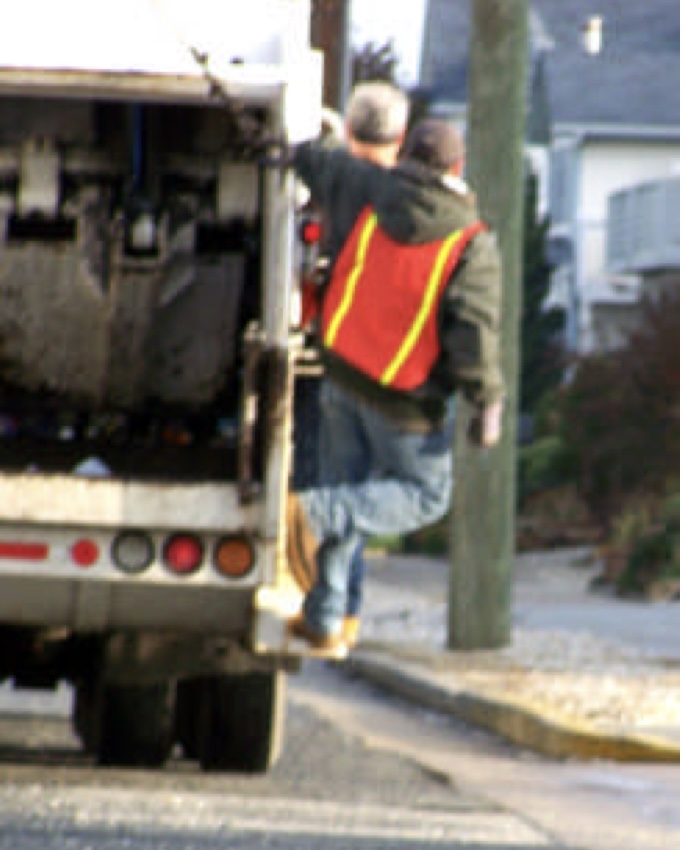
According to two separate but nearly identical lawsuits (1) filed eight months after the accident by both of his parents, 17-year-old Kyle Hartley’s injuries from that day—when he was assigned to work the back of a garbage truck without any training and in defiance of his parent’s wishes—included a severed right leg, mangled right arm and right side of his face, and back and brain injuries; “among other serious and permanent injuries.” Ultimately, Kyle Hartley’s right leg had to be amputated. 

The accident happened on one of the busier stretches of York Street, along the same curve where, in 2014, a driver struck two pedestrians who were walking peaceably on the sidewalk—killing one of them. In this case, the truck and Hartley were struck by a minivan.

According to a story by WRDW News of Augusta, three pedestrians had been struck by vehicles in the previous year, Aiken Public Safety warned that drivers “forget that York Street is a major highway,” and “Aiken’s city manager says he’s noticed the high volume of accidents out on York Street and is working with SCDOT to see if anything can be done to stop the speeding and reduce the accidents.”

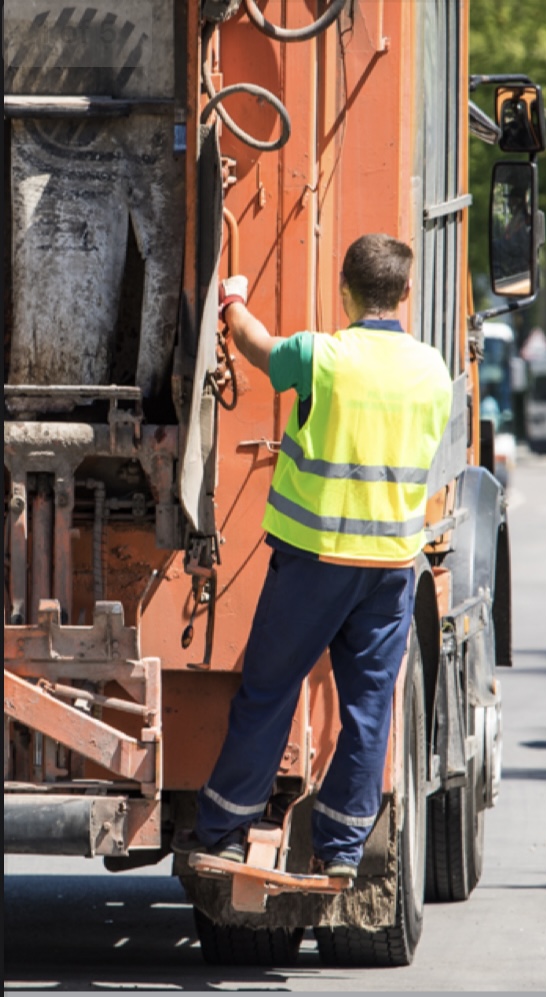
York Street was definitely a more dangerous setting for traditional trash pickup involving workers riding on the rear steps of rear-loading trucks; and a much better candidate for the only single-operator, automated garbage truck the city owned and operated at the time. But for whatever reasons, one of the three older style models was operating on that stretch of road, and an inexperienced 17-year-old minor working at a seasonal job happened to have been improperly assigned the task of riding the rear step and assisting with unloading trash bins.

Later that evening, at the tail end of the Council’s regular meeting, Mayor Rick Osbon asked again that the city “hold our young employee who was injured today in our prayers and his family, and the crews who were working with him.” 

The Mayor’s comments followed a brief tribute to the city’s safety record, during which Mr. Bedenbaugh described payments back to the city from its insurance fund, the South Carolina Municipal Insurance and Risk Fund (SCMIRF). 

Mr. Bedenbaugh stated that ‘Aiken belongs to the Municipal Insurance Pool. The City received a surplus check of $144,689 due to the overall favorable performance of the city employees. We were notified that the City can expect to receive a check in June 2020 for $144,458. The City of Aiken was one of the founding members of the Insurance Pool in the early 1980s. It has paid dividends a lot of years…,I would like to complement our Risk Manager, Lex Kirkland, and our supervisors and department heads. They take safety seriously.” 

If there were any objections from Council to the lauding of the city’s safety record on the day of an accident in which the City’s safety system clearly failed at a massive scale, the meeting minutes and video of the meeting do not reflect concerns about the contrasting messages.

Nearly five years after the insurance rebates were announced, and four years after lawsuits were filed, Attorney David Morrison, who is representing the city but is apparently being paid by SCMIRF—which has a coverage limit of $1 million per claim and can rescind legal defense if that limit is reached (2)— filed a Motion for Summary Judgement in the Hartley vs City of Aiken cases.  

The Motion came more than four years after the two Complaints that were filed by Kyle Hartley’s parents, Kristi and Keven Hartley, who sought redress through the courts for lost income, medical expenses, and mental anguish; with their attorney Jason Samuels (of the Samuels Reynolds Law Firm of Columbia) contending that: 

Plaintiffs [have] also suffered extreme mental anguish from the moment [they] became aware of [their] son’s accident and medical condition, watching as [their] son has endured the amputation of his right leg, many surgeries and during the process of caring for [their] son and making medical decisions directly effecting [their] son’s future.”

Morrison made four short arguments, written entirely in capital letters, in support of its Motion for Summary Judgement: 

  • The Plaintiffs cannot establish that their claims of harm from emotional distress were caused by the City’s actions.
  • The City is protected by sovereign immunity. 
  • The state’s Worker’s Compensation Act prohibits the Hartleys from recovering damages.(3)
  • There was no “objective significant physical injury as a result of the alleged emotional distress” to support their claims.  

    (The Motion was scheduled to be heard on August 21, 2024, but was continued until the next available date.)

From Prison Labor to Modern Trash Collection

In many ways, the Hartley case is more than eight years old; beginning at the end of the City’s decades of access to cheap, almost free, state prison labor for use in garbage collection.  That reliance on prison labor was, arguably, one root cause of the Hartley accident. (4)

In March 2016 the State Department of Corrections announced it would be closing the Lower Savannah River Early Release Center on Wire Road.  The Center had long provided prison labor to local governments for use in menial tasks such as litter pickup, sorting at the City of North Augusta’s recycling center, cleanup at the Aiken County Animal Shelter, landscaping and grounds maintenance, and riding the back of rear-end loading garbage trucks for the City of Aiken’s public works department.  In total, approximately 100 early-release inmates worked across the county; 35 of which worked for the City of Aiken. 

The cost to the City was $15 per day, or about $4,000 per worker per year, amounting to less than $25,000 for the four to six inmates used daily for trash pickup and less than $100,000 for the eighteen inmates who worked on landscaping operations. The replacement cost for hiring ten temporary workers for the entirety of Public Works was about $250,000–a figure that included replacing the inmates with only ten temporary workers. Instead of hiring full-time workers, the City opted for the next cheapest option to prison labor—which also guaranteed a less experienced workforce and chronic labor shortages.

For the next three years following the work release center closing, the City slowly charted a path forward from the prison labor workforce model to a safer, modern model involving robotic garbage trucks.

Kyle Hartley got caught in that transition from three-person trash collection crews involving prison-labor to a single-operator system utilizing automated garbage trucks. The labor shortages wrought by the use of low-paid temp workers contributed to the misguided decision by city management to place him in the knowingly dangerous position on the back of a garbage truck; one known to have a high rate of workplace fatalities as well as chronic injuries.

Hartley was a 17-year-old minor hired as a seasonal worker in the Public Works Department; what was to be a summer landscaping job before heading off to college. At the time of his hiring, there was only one single-operator truck and 3-4 rear-loading trucks requiring manual operations from a crew riding the rear of the truck.

When he was assigned to garbage truck duties in defiance of parental guidance, the hazards of riding on the back of rear-end loading trucks were well established; yet he was told to ride on the back of a truck without any training.

The small fleet of three new, remote-loading, single-operator trucks arrived just a few months after he suffered his debilitating injuries.

According to the meeting minutes for work sessions from 2016 to 2019, City Council and City staff discussed and debated the merits of upgrading the garbage truck fleet versus staying the course. The former Public Works Director Tim Coakley urged the latter, while former City Manager John Klimm was the first to advocate for the former. Following are the highlights of those meetings. In all but a few cases when Klimm was manager, the discussions centered on costs and efficiencies, not safety. 

May 9, 2016: City Manager John Klimm discussed an operational audit of the Public Works department, stating that “we are just about to get into another round of purchase of garbage trucks, and the question is whether this is the time for us to take a look at some of the technological changes that have occurred over the last 5 or 10 years such as robotic trucks and that type thing. With the news about the possibility of losing the inmates, we have an even more interesting aspect. The first phase of the study, which is in draft form, does show there would be cost savings. There would not be huge cost savings because the new trucks cost a lot of money.” 

June 15, 2016:

Public Works Director Tim Coakley explained how “the state had closed us off from inmates a couple of weeks ago and shipped them to the Trenton (correctional) facility,” and that “$250,000 had been placed in the Public Services budget for temporary labor for next year.”

July 11, 2017

City Manager Klimm described the status of the Public Works audit, describing again how, “Many, many areas across the country have gone to robotic trucks…He said we have three people on each truck currently while other areas have one person on the robotic trucks. He said the bottom line is there was merit in looking seriously at robotic trucks. The savings were relatively modest, but when you put in the fact that inmates are not going to be available anymore, then it substantially changes things.” 

April 10, 2017 

Public Services Director Michelle Jones made the case that the City should take a phased approach to upgrading to robotic trucks that require only one driver-operator. She also raised the issue that modern automated trucks “would eliminate two potential risks” by replacing three-person crews per truck and going to one person per truck. 

John Klimm also spoke about safety, stating that “traditionally worker’s comp claims are high for cities for garbage collection employees, but this is not the case in Aiken at this time, but could be in the future…there is concern about the present system where two employees hold on to the back of the truck. There is concern about their safety.” 

Council opted to add the purchase of a single robotic garbage truck to the budget. 

December 10, 2018. 

There was another discussion about the garbage collection labor situation and the existing fleet of trucks; with complaints regarding increased labor costs continuing two years after the loss of prison labor. The discussion focused on efficiency and costs. 

At one point, Councilman Dewar asked about the experience with the single-operator automated truck. City Manager Stuart Bedenbaugh replied that “it is working, but City-wide, it would be difficult to implement because of some of the tight spaces in older neighborhoods with a lot of old-growth trees and above-ground utilities.” 

Mayor Rick Osbon then stated the single-operator trucks “work in Aiken Estates and Gem Lakes;” two neighborhoods with substantial tree canopies.

At the end of the discussion, Tim Coakley stated that he “would not recommend purchasing another single-operator truck. “

Safety was not a reported topic of discussion. 

March 25, 2019. 

Tim Coakley addressed the single-operator system, stating, “It has not performed as staff would like. There have been several breakdowns in the first year…there are a lot of neighborhoods where the one-man truck cannot be used.” He pointed out that the truck “cannot run in Kalmia Hill as it is too tight and there are a lot of cul-de-sacs.” He also described residents “not putting cans out correctly” as another disadvantage for a single-operator system. 

When Councilman Ed Woltz inquired as to the cost of new equipment, City Manager Bedenbaugh responded with a figure of $1.4 million. 

April 30, 2019

City Manager Bedenbaugh informed Council that there were enough funds in the Depreciation Account to replace four trucks. The subsequent budget approved for Fiscal Year 2019-2020 contained funding to buy four new single-operator, automated garbage trucks. 

One week into the new budget year, Kyle Hartley suffered his injury while riding on the back of one of the old garbage trucks. 

July 8, 2019:

Mention is made of the Hartley accident and injuries, with thoughts and prayers offered.

November 25, 2019:

Lex Kirkland, who had recently replaced Tim Coakley (5) as the Public Works Director, told Council that three new single-operator trucks had been purchased and were in use, and that “the process is getting faster every day. (Crews) hope to pick up more than they were able to pick up with the rear loaders as they get used to them…citizens are becoming accustomed to putting the cans out correctly.” 

Year and value of three Peterbilt automated, single-operator garbage trucks approved for purchase by City Council in June 2019, and purchased in 2019 after the July 8, 2019, Kyle Hartley accident. From: City of Aiken’s 2022 Insurance Coverage Contract with the South Carolina Municipal Insurance and Risk Fund (SCMIRF), a division of the Municipal Association of South Carolina (MASC). The inventory shows one 2004 model rear-end loading garbage truck remains in the fleet as a backup.

Footnotes

(1) The case file in sccourts.org is skimpy. For example, there are no portions of the deposition transcript associated with any Motions, and there are no Memorandums in Support of or in Opposition to the May 2024 Motion for Summary Judgement. The most recently scheduled hearing was deferred to a future date.

(2) Like many other personal injury cases asserting negligence or other undue actions on the part of the City, injured parties are more likely to face its insurer, South Carolina Municipal Insurance and Financing Fund (SCMIRF).  

SCMIRF, though, is not actually insurance, nor is it subject to state insurance laws. 

The City of Aiken’s insurance coverage for property and liability through SCMIRF is described in the city’s policy as: 

a statutory pooled self-insurance liability fund established pursuant to Section 15-78-140 of the South Carolina Code and by intergovernmental agreement.  By statute, SCMIRF is not insurance, nor is it subject to state laws regulating insurance. Nevertheless, Section 15-78-140 requires SCMIRF to provide multiple lines of coverage.”

The following question was posed during a February 2023 City Council meeting following the publication of an Aiken Chronicles update on the case. 

Who pays the attorney costs for these personal injury cases against the city? Is it the insurance company or is the city? Is it the insurance companies that hire the lawyers for personal injury cases that are going to involve possible settlements greater than a hundred thousand dollars?” 

City Attorney Gary Smith answered, 

Don’t hold me to this. The city manager would be able to answer this question better than I can. But we do have insurance through the municipal Insurance risk fund and there are cases from time to time where they will take up the cost of litigation and they’ll take up the cost of the Judgment if there is one. There are some cases where the city has to fund its own legal expenses. I believe this is one being funded by MIRF but I can’t promise you that.” 

A FOIA request for all of David Morrison’s legal invoices to the City of Aiken for 2022 and most of 2023 revealed no billings for the Hartley case. SCMIRF is clearly picking up the bill. 

This makes perfect sense, as the City’s insurance policy states that “SCMIRF has the right and duty to defend any Suit asking for Money Damages.” (below)

Click to enlarge.


The General Conditions clause further states that “it is agreed that SCMIRF shall make all final decisions regarding the legal defense of claims, regardless of whether the Member elects alternative premium financing option, including but not limited to a deductible or individual self-insured retention.”

What is unclear is to what extent SCMIRF has the final say on settlements.

A major settlement or jury award could temporarily trigger the end of SCMIRF’s duty to defend or settle future lawsuits. According to the City’s 2022 Insurance Coverage document, “SCMIRF’s liability for any one Incident is limited to $1,000,000 per Member.”

As reported in Fencing After the Fact, the City’s self-insurance is for up to $100,000 per incident.

The City of Aiken should identify its role in the decision-making on a final settlement should be identified.

Should the case go to jury, the City and SCMIRF are undoubtedly aware that two recent jury awards to prisoners injured while at the Aiken County Detention Center have added up to $1.1 million. Jurors are much more likely to be symphathetic to the plight resulting from horrific workplace injuries suffered by a healthy, 17-year seasonal landscape work unnecessarily performing dangerous trash collection duties.

(3) The Civil case has crawled through the judicial system for more than four years while Kyle Hartley’s concurrent, complex worker’s compensation case was litigated.

SC Worker’s Compensation law, SC 42-9-10, requires workers with “total disability” to receive two-thirds of average weekly wages for up to 500 weeks. If the disability is partial, it would be for up to 340 weeks.

If the injured worker becomes paraplegic or quadriplegic, or who has suffered from brain damage, then the benefits are for life.

No matter what the case, the benefits for Kyle Hartley would be scanty.

If his wage was the current starting pay of $11.50 per hour, a worker’s compensation payout would be only an estimated $308/week.

If his wage was ~$9.50 per hour, which was typical at the time, the payout would only be $254/week, or merely as much as $125,000 and as little as $86,000 for the loss of a leg while performing work for which he was no trained.

(4) The prison labor practice was not without similar safety problems, as this lawsuit in federal court in 2009 suggests.

(5) Coakley left the city’s employment role. He was named as a Defendant in the Hartley vs City of Aiken lawsuits, but later dismissed.


A Hotel in The Alley: The Other 2021 Public-Private Partnership Failure.

In May 2021, Aiken attorney, real estate investor, and developer Ray Massey led an effort to obtain properties owned by the City of Aiken as part of a larger development that included a 100-room hotel and later Project Pascalis. This was an unknown public-private partnership effort that was negotiated in private; one that ultimately failed on its own, and before any public scrutiny emerged.

The object of Massey’s courtship with the City was a 0.21-acre, city-owned property—known alternatively as the Brinkley Property, the Bike Building, or the USC-Aiken Building (1), and herein, also referred to as the Alley Property—a parcel dominated by a 4,023 square-foot, one-story building at the corner of Newberry Street SW and the Alley (Figure 1a). At that time, the building was unoccupied and the property was destined to be declared surplus property.

Also at the time, Massey’s investment and development group, Aiken Alley Holdings, owned or had under contract 0.56 acres of property along Newberry Street, across the Alley from the City of Aiken’s “Brinkley Building” property (Figure 1c). Massey’s expressed intent was to construct a 100-room hotel on those 0.56 acres, preferably through a public-private partnership with the City of Aiken.

Aiken Alley Holdings’ first attempt to acquire the City of Aiken property was a proposal for a 99-year ground lease of the Brinkley Building, along with a 50-foot wide portion of Newberry Street itself, at a greatly discounted fixed rate of $12,000 per year. Their second attempt at acquisition was a proposed outright purchase of the building at the greatly discounted sale price of $750,000.
Both efforts ultimately failed to move forward to the necessary public hearing stage—both proposals failed without any public interference.

The negotiations on Massey’s ground lease proposal were conducted on the city side of the table solely by City Manager Stuart Bedenbaugh. This private negotiation for city property occurred despite the fact that Massey is a partner within the City’s law firm, Smith Massey Brodie Guynn and Mayes (SMBGM). Massey consistently used SMGMB letterhead in his business correspondence with both Bedenbaugh and Economic Development Director Tim O’Briant.

Today, a “portion of the building” is under consideration to install a much-need public restroom in The Alley—a facility the City failed to provide when it renovated the popular commercial district nearly a decade ago. But the future of the entire surplus property still remains in limbo
.

(All emails from Ray Massey to Aiken city officials that are cited or described in this article can be found in this file obtained via a Freedom of Information Act (FOIA) request. A glossary of terms, individuals, and groups can be found on this page).


by Don Moniak
August 26, 2024

Aiken resident Jacob Ellis is known for asking questions to, and inducing answers from, Aiken city officials during public meetings. On June 10, 2024, Mr. Ellis asked, “Why are there no public restrooms in The Alley?”

According to the meeting minutes, City Manager Stuart Bedenbaugh responded, “The City is getting pricing on converting a portion of the building at Newberry (Street) and The Alley to public restrooms.” He noted he did not know if that would be the location. He said that, internally, staff had talked about the location for public restrooms but that “we need to talk to Council about the matter and the next steps.”

Mr. Bedenbaugh did not address future possibilities for the remainder of that building and its surrounding property (Figure 1a); nor whether any alternatives were under consideration.

Three years ago, Bedenbaugh was involved in another effort to develop the property in question, which is now the City’s only remaining parcel of land in The Alley. It was a complicated and stealthy effort to pursue a separate downtown development that originated during the first rendition of Project Pascalis, and continued to overlap with the second version of the Pascalis project. As with Project Pascalis, a public-private partnership involving city property and a development agreement was envisioned.

The City of Aiken obtained the Brinkley property in 2008 for $930,351; for the purpose of expanding its 224 Park Avenue SW Municipal Building. That repurposing was never realized, as City Council opted instead to buy and repurpose the historic Henderson Hotel (former Regions Bank building) at 111 Chesterfield Street.

From late May 2021 to January 2022, Aiken attorney Ray Massey lobbied Bedenbaugh on behalf of his newly formed investment and development group, Aiken Alley Holdings LLC, to control the City’s Alley property. Aiken Alley Holdings LLC had already purchased three properties on the north side of The Alley in March 2021 (Figure 1c).

First, Massey proposed a 99-year ground lease of the property and its building, as well as a 50-foot wide stretch of Newberry Street containing most of its southbound lane (Figures 1b and 3). When that effort ultimately failed to gain traction, Massey’s investment group offered to purchase the City’s Brinkley Property, along with the city-owned parking lot across from the Hotel Aiken.

These negotiations occurred in the absence of the City commissioning any appraisals, seeking competitive bids, conducting a Request for Proposals (RFP) for the soon-to-be-surplus property, and/or holding a public hearing; an absence of due diligence that, sadly, continues to this day.

Massey’s lobbying efforts began the day before the AMDC and City of Aiken, via the contract assignment to the Aiken Chamber of Commerce described in Part 1 of this story, gained control of the six properties in the Pascalis project footprint (collectively known as the “Shah Property”). The assignment was the culmination of a failed, two-month-long effort to pursue a larger version of Project Pascalis (1).

As reported in the three-part series Project Pascalis Includes the Alley, Ray Massey had been heavily involved in the first, failed rendition of Project Pascalis, thus obtaining considerable inside information on the inner workings of the project.

Figure 2: This April 2021, rendition of a hotel, apartments, and retail space at Newberry Street and The Alley was envisioned as part of the first version of Project Pascalis. The building on the left is on the site of the existing City of Aiken’s “Brinkley Property” along The Alley. The hotel was to be built on the north side of The Alley. That Project Pascalis effort quietly failed, without any public disclosure, in early May 2021.. The vision for a 100-room hotel on the north side of The Alley continued through much of 2021, with Aiken Alley Holdings LLC (Agent Ray Massey) lobbying City Manager Stuart Bedenbaugh to gain control of the city’s property in The Alley.

The Ground Lease Proposal

On May 24, 2021, Ray Massey sent a Letter of Interest (LOI) to City Manager Stuart Bedenbaugh. In the LOI, Massey relayed the desire of his investment and development group, Aiken Alley Holdings LLC, to build a 100-room hotel on the “Harrison Property” just north of the intersection of The Alley and Newberry Street.

To accomplish this goal, Massey proposed a 99-year ground lease for The Alley property owned by the City, and a 50-foot wide, 4,000-square-foot part of Newberry Street in front of the property. (Figure 3). He also sought a development agreement with the City to develop the immediate area.

Massey’s first offer to Bedenbaugh was submitted with the letterhead of his, and the City’s, law firm of Smith Massey Brodie Guynn and Mayes (SMBGM). The deal would be $10,000 per-year fixed rental rate to lease the City’s Alley property and 4,000 square feet of Newberry Street. A day later, Massey upped the offer to $12,000 per year; a meager $1,000 per month for 99 years (Figure 4).

The Letter of Interest stated that, “We believe this LOI can be consummated on or before December 31, 2021 (the ‘Target Closing Date’).” (emphasis original).

Figure 4. Portions of the Letter of Intent from Aiken Alley Holdings LLC, via SMBGM, to Stuart Bedenbaugh. (click to enlarge).

Neither the Aiken Municipal Development Commission (AMDC) nor Economic Development Director Tim O’Briant were listed as recipients of the ground lease proposal.

O’Briant had also emailed Massey on the 24th, attaching a prospectus for potential Project Pascalis developers, with the message:

Last week we sent out a packet to a number of interested developers as we try to develop proposals rooted in a common set of objectives. To date, we have had expressions of interest that are all over the map. The preference is for one developer to deliver all components of any eventual project and then sell back the portions that will be owned and operated by the public sector. (the conference center and garage primarily).  I know that your group’s vision is different than what is contained in this thumbprint, but I wanted you to have the same benefit as the others who will submit master developer proposals in the event that you decide to weigh in on that umbrella role.”

The next day, May 25th, in reference to the O’Briant email, Massey wrote to Bedenbaugh; but not O’Briant:

We can discuss this also after we discuss the LOI. I would prefer if just you and I are on the call.”

Shortly after that email, Massey sent Bedenbaugh a nearly 20-year old supporting document for his ground lease offer (Figure 5); an email that referenced a Letter of Interest for the Hotel Aiken from an unidentified party that included a $1 million offer price.

Figure 5. A LOI for the Hotel Aiken was submitted around May 24th. It is unknown how Massey knew about the $1 million proposal for the site, as all bids and proposals during the search for a Project Pascalis developer had not been publicly disclosed—and remain undisclosed. The one probability is that Greenville developer Andy Cajka had made the $1 million bid. Massey had been put in touch with Cajka by Tim O’Briant.


Over the next few months, Massey kept in contact with both Bedenbaugh and O’Briant, sometimes together, sometimes separately, literally working both sides of the street—or, in this case the Alley.

The Massey group’s overtures to Bedenbaugh began to further overlap with the updated Project Pascalis. In a June 4th, 2021 email to Chip Goforth, O’Briant described “awaiting whatever it is that Ray and his group come up with. Whatever it is it should be good for downtown.”

On June 7th, the deadline date for the new Pascalis project proposals, the group submitted a two-paragraph Letter of Intent—again on SMBGM letterhead. Massey reiterated his group’s desire to build a 100-room hotel at the corner of Newberry and The Alley, and also revealed, without actually identifying them by name, the background of partner firms Raines Corporation and Lat Purser & Associates (Figure 6).

HO
Figure 6: Letter of Intent from Ray Massey to Tim O’Briant to become the Project Pascalis developer. The letter shows that Massey was privy to the inside knowledge that the Chamber of Commerce had the properties under contract. Other developers had been told in Tim O’Briant’s prospectus letter that the AMDC “holds contracts to purchase roughly 1.6 acres in the downtown” but made no mention of the Chamber. The Chamber had signed its assignment papers for the “Anderson property” on June 3rd and for the “Shah property” on May 25th.

The AMDC met on June 8th to discuss the selection of a Pascalis project developer. After meeting in a closed-door Executive Session, the Commission voted to authorize Chairman Keith Wood to enter into negotiations with a potential developer related to Project Pascalis.

Prior to the meeting, Massey had written to Bedenbaugh, regarding the ground lease proposal:

What is the date the City will consider my LOI on the Bike Property? I believe you said June 15. Is that correct? Also, after I meet with my development team on the 15th, I would like to have a meeting with the City Council (work session) to discuss our proposal. Much like Mr. Wyatt did earlier this year. Is that possible, and can we schedule?”

Two days after he was authorized by AMDC to negotiate with potential Project Pascalis developers, Chairman Wood expressed concern over a potential “real or perceived conflict of interest” involving Aiken Alley Holdings Letter of Intent, writing to Bedenbaugh:

Stuart, 

Indirectly related, I have concerns relative to a conflict of interest the City Attorney may have in our process. I noted that Ray Massey submitted the Alley proposal on letterhead that included Gary Smith’s name. In addition, I am concerned that Gary’s attendance in future meetings with developers may compromise our process based on his relationship with Ray Massey (i.e. same legal firm). I recommend we ensure the proper firewall exists to alleviate any real or perceived conflict of interest.” 


Bedenbaugh dismissed the concerns, seeming to confuse ethics law with the issue of attorney-client privilege, and writing that “we have had similar issues in the past and have not had any problems.”

No “firewall” between City Attorney Smith—who still represented the AMDC at that point—and Aiken Alley Holdings was contemplated, and Massey continued to use SMBGM letterhead in business correspondence with city officials.

On June 24th, Massey continued lobbying for his 99-year ground lease, writing to Bedenbaugh,

Hi Stuart,

Now that we have met, and we are submitting this week the addendum, there is probably no need to meet yet with the City Council on the 28th of June. Do you agree?”


Bedenbaugh agreed, and no such meeting ever occurred. The addendum (not yet disclosed) to the Letter of Intent was sent to O’Briant and Bedenbaugh on June 24th.

On July 2, 2021, the overlap with version two of Project Pascalis continued to increase when Massey emailed both Bedenbaugh and O’Briant, again on SMBGM letterhead (Figure 7). This time he identified some of the investment group’s members—including PGA golfer and Aiken resident Kevin Kisner. Again, no member of the AMDC was cc’ed in the letter.

Figure 7: Letter from Ray Massey on behalf of an unnamed group and team.

The July 14th Cocktail Hour

On July 13, 2022, Massey emailed Bedenbaugh and O’Briant to inquire about the status of the Project Pascalis procurement process, again without cc’ing AMDC officials, writing:

“ I am following up regarding the pending project to see if you know when a decision will be made regarding selecting a developer. I believe it was said in our last meeting that a decision would be made to eventually dance with one partner.”

It was Bedenbaugh who replied that “We are at least several weeks from determining;” an indication that, at that point in time, he had taken a lead role in selecting a developer—rather than project leader Tim O’Briant or the authorized negotiator Keith Wood, and despite the fact that Bedenbaugh was only a non-voting ex-officio AMDC member.

The next day, Bedenbaugh and Massey exchanged emails (3), sans O’Briant and Wood, to set up a meeting, one that resulted in an agreement to meet for a drink instead of at Bedenbaugh’s office. The exchange read, in part:

8:14 a.m. Massey: Can you meet with me today at 5? We can meet for a drink or we can meet at your office, whatever you prefer, if you are available. I just want to give you a quick update, and provide you with some good news.

8:41 a.m. Bedenbaugh: We can meet at 5 for a drink. Name the place.

8:45 a.m. Massey: How about the Whitney at 5?

The outcome of that meeting is unknown.

The series of Pascalis project-related events that followed (4) included Bedenbaugh and O’Briant shepherding the approval of a $10 million bond issuance in August 2021; the October 2021 $9.6 million general obligation bond issuance; the AMDC’s $9.5 million purchase of Pascalis and public disclosure of the project status; and the subsequent $5 million Purchase and Sales Agreement for those same properties between the AMDC and the Massey-led RPM Development Partners LLC.

While Pascalis moved forward, Massey and his local investment group continued their attempts to gain control of The Alley property—this time by an outright purchase.

Another Bid for the City’s Alley Property.

On December 27, 2021, just three weeks after signing the Pascalis PSA (Purchase and Sale Agreement) on behalf of RPM Development Partners, Massey signed a PSA on behalf of another investment group, CTR, LLC, for both the City’s Alley property and for a city-owned parking lot behind the Security Federal building on Richland Avenue. The total purchase price was $750,000. (CTR stands for Craig (Heath), Todd (Gaul), Ray (Massey).

On January 24, 2022, the following item appeared on City Council’s meeting agenda:

(6) Reading and Public Hearing of an Ordinance Approving the Sale of Two Parcels of Property to CTR, LLC.”

Stuart Bedenbaugh’s supporting memorandum (Figure 8) for the Ordinance included no reference to competing bids nor any kind of appraisals, and justified the discounted sale prices on the basis of lost tax revenue in the previous thirteen years. In essence, Bedenbaugh argued that the city should accept the financial loss because it already had foregone tax revenues due to City Council approving purchase of the building in 2008; he included no references to increased downtown property values since that time.

The public hearing never happened. After a closed-door Executive Session attended by Massey, his investment and development partner Todd Gaul, and City Attorney Gary Smith, City Council took the proposal off the agenda, but did not table it.

The vote to remove it from the agenda was 6-1, with Councilwoman Andrea Gregory voting to keep it on the agenda and hold a public hearing.

Figure 8: The supporting memorandum for the discounted sale of The Alley property and a city-owned parking lot situated behind the Security Federal building and the then-Meybohm Building owned by (Agent: Todd Gaul).


Another Bid for Newberry Street.

While CTR’s effort to acquire the city-owned Alley property lay dormant, a second effort to acquire a part of Newberry Street prominently emerged in March of 2022.

The proposed privatization of a portion of the City’s Newberry Street—one similar to the Massey group’s 2021 ground-lease proposal—would ultimately direct more public scrutiny and outrage towards Project Pascalis than any other aspect of the project.

The proposal involved the conveyance of a portion of the city-owned street to the AMDC’s Pascalis project “preferred developer,” RPM Development Partners (a company formed in October 2021; whose acronym stands for Raines, Purser, and Massey; and whose Registered Agent is Ray Massey). In exchange, RPM would transfer the Harrison Property to the City—although the fate of the final ownership of that parcel if Project Pascalis succeeded was uncertain.

On March 28, 2022, the first Public Hearing on the privatization Ordinance was held. Twenty speakers walked to the podium to object to the Ordinance; no parties rose in support. Neither Massey nor any other member of the development team, if any were present, were asked to present their case.

City Attorney Gary Smith did not recuse himself at that meeting, and continued to serve as the City Council’s Parliamentarian and attorney; both at a prior closed-door Executive Session pertaining to Project Pascalis and during the Public Hearing. At one point, Smith provided a favorable interpretation of the deal that benefitted his partner’s investment and development group—but overall deferred to Bedenbaugh and O’Briant.

Early in the session, Bedenbaugh (Figure 9) praised the “piecemeal” nature of the process, stating:

One of the things that makes this project unique is that it is not being put together by a developer for a multi-layer plan that has multiple elements being presented to the public at one time. He pointed out that this plan is being done in a piecemeal fashion so there are elements that are easy to review and have public engagement.”

Stuart Bedenbaugh’s statement to Keith Wood in June 2021 about a lack of “problems” involving City Attorney Gary Smith proved to be no longer true; as Smiths’ presence at a public hearing that involved the acquisition of city-owned property by an investment and development group headed up by his partner Ray Massey galvanized enough community outrage to compel Smith to distance himself from the project.

At the second Public Hearing on the Newberry Street privatization Ordinance, AMDC Attorney Gary Pope Jr. sat in the City Attorney’s chair; the late Jim Holley was also retained to represent the Design Review Board and guide it through the Pascalis project review process; and after May 9, 2022 Attorney Daniel Plyler began to represent the City Council during any meetings where closed-door Executive Sessions pertaining to the Pascalis project were also held.

Even though the Newberry Street privatization Ordinance was approved on May 9, 2022, the lack of recusal by Smith during the first hearing, coupled with the effort to privatize part of Newberry Street were two contributing factors in the eventual demise of Project Pascalis.

Today, the City’s Alley Property remains vacant, and an informal proposal to convert part of the building to a public restroom facility is pending; the fate of the entire property is yet to be determined. Aiken Alley Holdings continues its ownership and leasing of the Harrison Property (Figure 10) and the adjacent properties in The Alley. It is unknown whether any redevelopment plans are under consideration.

Figure 9: City Manager Stuart Bedenbaugh at the First Reading of the Public Hearing (44:00 minute mark) for an Ordinance to privatize 0.6 acres of Newberry Street. A smaller-scale version of the Ordinance eventually was approved on May 9th. After the Pascalis project was cancelled, following intense public scrutiny and outcry and a major lawsuit, the Newberry Street privatization Ordinance was repealed in early November 2022.


Summary.

For nearly one year, Aiken property investor Ray Massey lobbied City Manager Stuart Bedenbaugh to control the City’s remaining property in The Alley; first via a 99-year lease and then through an outright purchase—all at deeply discounted prices, one of which Bedenbaugh favorably presented to City Council.

While the plans fizzled, the facts remain that Massey conducted business using the letterhead of the City’s Law Firm of Smith, Massey, Brodie, Guynn, and Mayes; and that Stuart Bedenbaugh, even when prompted by AMDC Chairman Keith Wood, did not view these circumstances as potentially suspect, if not locally explosive.

Instead, Bedenbaugh continued to meet with a member of the City’s law firm to discuss the sale and/or lease of a city property and the status of Project Pascalis negotiations. In January 2022, their negotiations culminated in an agreement to sell city properties at greatly discounted prices—an offer that City Council wisely chose to avoid even discussing in public.

At the same time, the Aiken Municipal Development Commission, and to a lesser extent Economic Development Director Tim O’Briant, was kept uninformed about the Bedenbaugh-Massey negotiations and discussions. The project concept was not only discussed outside of public view, the high level of stealthiness even excluded the very organization, the AMDC, charged with redevelopment efforts in the downtown area and Parkway District.

In spite of the Massey group’s intense interest in the building, the City has never pursued an RFP for the building, obtained an appraisal, sought competitive bids, or, until now, officially considered repurposing it for the public good such as for well-needed restroom facilities and a cooling station.

Two years after Project Pascalis failed, there has still been no activity or official proposals for the City’s Alley Property—proving that local government is very capable of internally fumbling management of its own properties. If not for a question posed by an Aiken citizen, the future possibilities for the property would be unknown.

Figure 10: The “Harrison Property” today. The building is occupied by a contractor whose window decal ironically portrays what would have been an interim scene in the surrounding downtown area had the Pascalis project and the Aiken Alley Holdings project moved forward.


Footnotes:

(1) The “Brinkley Property” is referred to as “The Alley” property for the purpose of this article, to simplify the situation and avoid confusion with the larger, private Brinkley Property on the adjacent parcel to the south.

The property has, over the years, had several occupants. From about 1954 to 1984 the bright yellow Birdsey Grocery building occupied the site. According to Laura Lance, “it was within walking distance to downtown homes, and was also a venue for poor people and black people, who often didn’t shop some of the other grocery stores during most of these years.”

Overall, Birdsey’s was a downtown institution for 50 years, as it was formerly called Birdsey Flour and Seed, an establishment that would grind wheat and other grains for farmers.

After Birdsey’s, the building became a restaurant, then a gift shop. From 1994 to 2004 it was the Cyclesport bicycle shop, thus earning it the nickname of “The Bike Shop.”

After the City obtained it in 2008, USC-Aiken occupied it for several years.

(2) The original PSA for the Harrison Property was signed on March 3, 2021 by WTC Investments, LLC partner Weldon Wyatt. At some point after April 30, 2021, the day that Wyatt offered to sell it to the City/AMDC, the PSA was assigned to Aiken Alley Holdings LLC; which bought the. the property on June 7, 2021, for $675,000.

(3) Prior to May 24, 2021, the following Project Pascalis events had transpired.

March 2, 2021: WTC Investments signed a PSA with the Shah family for six of the eventual Pascalis project properties; the package was referred to as “the Shah Property.”

March 3, 2021: WTC signed the PSA for the Harrison Property.

March 15, 2021: Aiken Alley Holdings purchased the “Laurens Building,” at 200 and 210 The Alley for $2 million. The properties would become part of the original Pascalis concept plan.

March 16, 2021: The existence of Project Pascalis was announced.

March 23, 2021: WTC’s development arm, GAC LLC, signed a Cost Sharing Agreement with the AMDC.

April 30 to May 6, 2021. A series of meetings between city officials and WTC/GAC management culminated in the end of the first Pascalis project. (Just prior to the collapse, Weldon Wyatt offered to sell the Harrison Property and the Aiken Alley Holdings properties to the AMDC. Although the offer was declined, it illustrated the strong connection and overlap between WTC and Aiken Alley Holdings.)

May 17, 2021. O’Briant began to recruit developers for a second, smaller-scale Project Pascalis effort.

May 25, 2021. The City of Aiken and the AMDC “gained control” of the Shah property via an assignment of the WTC PSA to the Chamber of Commerce. The same process involving the Anderson property occurred on June 3, 2021.

(3) The July 14, 2021, Massey to Bedenaugh email exchange:


(4) Pascalis related events from August 2021 to December 2021.

August 13, 2021: Tim O’Briant informed Massey that the AMDC had selected him to negotiate with potential Pascalis developers. (However, the meeting minutes for the August 10, 2021 AMDC meeting show no such decision was officially made or conveyed following an Executive Session.)

August 24, 2021; The City Council approved the $10 million bond issuance for the AMDC to potentially obtain properties in the “Parkway district”—even though city officials knew the properties in question were the seven Pascalis parcels in the downtown.

The day after the decision, Massey asked O’Briant in an email, “how did it go last night?”

October 6, 2021: Attorney Gary Pope of the law firm Pope and Flynn is retained by the COA and AMDC to act as the AMDC’s attorney.

October 17, 2021: Massey registers RPM (Raines, Purser, and Massey) Development Partners as a South Carolina LLC.

November 9, 2021: After more than a month of failed negotiations to reach a Master Development Agreement and purchase arrangement for the Pascalis Properties with RPM, or an equivalent consortium, the AMDC bought the properties at the $9.5 million price tag; and reimbursed the Chamber its $135,000 in earnest monies.

December 5, 2021: Massey signed, on behalf of RPM the PSA for the Pascalis Properties, at a greatly discounted price of $5 million.

Additional References:

The Pascalis Attorneys also provide details of the Newberry Street Ordinance and the Ordinance to approve $10 million of general obligation Municipal Bonds for purchasing properties in “The Parkway District.”

The AECOM Plan provides more details of the events leading up to the failure of the first version of Project Pascalis, where the A memorandum from Tim O’Briant to AMDC members Jameson, Chris Verenes, and Chairman Keith Wood  was first published.

A Letter from the Preservation Foundation of Aiken’s on the Application for Demolition of the Hitchcock Stables

Preservation Foundation of Aiken
P. O. Box 3087
Aiken, SC 29802

August 5, 2024

Ms. Faith Hawks, Chair and
Members of the Board
City of Aiken Design Review Board
111 Chesterfield Street
Aiken, SC 29801

VIA EMAIL

Re: Application for Demolition of the Hitchcock Stables

Ladies and Gentlemen:

The Preservation Foundation of Aiken (PFA) is a charitable foundation whose express purpose is to help preserve the history and architecture of Aiken. PFA opposes the application to demolish the historically important Hitchcock Stables (the “Stables”). The Stables are very significant in the history of Aiken. Mr. and Mrs. Hitchcock were the founders of the Aiken Winter Colony, a foundational period in the history of Aiken. Horses were of paramount importance to the Winter Colony, especially the Hitchcock family, and the Stables were at the center of this activity.

The Hitchcocks were responsible for the creation of many traditions and institutions which remain foundational to Aiken’s identity today. They donated the Hitchcock Woods to the Hitchcock Foundation (now Hitchcock Woods Foundation). They were founders of the Palmetto Golf Club, the Aiken Preparatory School (now Mead Hall), the Aiken Hounds and the Aiken Horse Show. Both Mr. and Mrs. Hitchcock were avid polo players and promoters of the sport. Mr. Hitchcock was the Captain of the first international polo team and a member of the Polo Hall of Fame. Mr. Hitchcock, considered the father of American steeplechasing, owned and trained may successful steeplechasers. He was inducted into the United States Racing Hall of Fame. Their son, Thomas Hitchcock Jr. was one of the finest, if not the finest, polo player of his time.

The historic significance of the Stables is of further import because of its association with Mr. and Mrs. G. H. Bostwick. Mr. Bostwick was nationally and internationally known as a champion steeplechase rider and for his contributions to the sport of steeplechasing. He was the top steeple chase rider in America from 1928 to 1932 and again in 1941. He occasionally rode for Mr. Hitchcock. Six of his steeplechase horses won the Eclipse Award for Outstanding Steeplechase Horse of the Year. Mr. Bostwick was also an accomplished polo player (8 goals) and court tennis player. Mr. Bostwick was inducted into the United States Racing Hall of Fame and the Polo Hall of Fame. Mrs. Bostwick carried on Mrs. Hitchcock’s legacy by serving as Master of the Aiken Hounds.

The current demolition proposal ignores the historic importance of this structure to the early days of the Winter Colony and the sporting history of Aiken. To justify the proposed demolition of such an important historic structure there must be a showing of something more than financial gain for the current owners. Can the Stables be rehabilitated? Stabilized? Indeed, can the Stables be saved?

The owners clearly have failed to demonstrate that stabilization or rehabilitation of the Stables is not feasible. The engineering report they have submitted outlines some issues with the Stables but does not and cannot conclude that stabilization and rehabilitation are not feasible.

Therefore, we respectfully request that you deny the application because of the Stables’ importance to the history of Aiken and because the applicants have not demonstrated that stabilization and rehabilitation of the stables are not feasible.


Sincerely yours,
Lucy M. Knowles,
President Preservation Foundation of Aiken

$5.7 Million and Counting: The Wheaton Place at Trolley Run Station Class-Action Lawsuit Settlements. 


by Don Moniak
August 23, 2024

Trolley Run Station in Northwest Aiken is one of the largest housing developments in Aiken County.  At present, there are 1,066 housing units on the more than 1,500-acre site, with another 1,091 single family homes  in the longer-term planning process (1).

One of the many subdivisions within Trolley Run is Wheaton Place, which is composed of 87 townhomes and was built between 2012 and 2016. 

Within a few years, residents were experiencing problems from stormwater, including flooding of backyards and water intrusion; as well as and HVAC and plumbing defects. The problems were severe enough across the subdivision that the Lucey Law Firm of Mount Pleasant, South Carolina, was retained to seek remedy on the part of homeowners.

A class-action lawsuit (2) naming four defendants—the developer Invesco LLC, ATSCO, Inc, Wagaman’s HVAC Sales and Service, and Hardy Plumbing, was filed by Attorney Justin Lucey on November 11, 2020.  In addition to the four initial defendants, “John Does #1-50” and “Jane Does #1-50” were listed to allow for additional defendants to be added to the suit. In total, an additional 32 defendants who had worked on aspects of the project were added to the Complaint; which was amended three times.

The order granting the class-action status was issued on February 2, 2022 (3). Eventually, 86 of the 87 eligible property owners signed up for the class action suit. 

The allegations in the original Complaint were outlined as defective work that led to additional property damages: 

The residences contained latent building defects, which have resulted in cracking foundations, water intrusion, and MEP (mechanical, electrical, and plumbing) deficiencies. These latent defects, in combination with storms and other fortuitous events, and regular and repeated exposure to harmful elements, including but not limited to water intrusion and differential settlement, have caused consequential damages to non-defective portions of the Residences.” 

A long series of Motions to Compel and Crossclaims have characterized the proceedings. In addition to the Plaintiff having to compel the production of records, especially from the developer Invesco, numerous Defendants filed Crossclaims and subsequent Motions to Compel against fellow Defendants. 

Figures 1-4. (1) Heavy erosion on graded slope during construction (top); (2) Graded slope subject to heavy stormwater runoff into flat backyards and homes (middle); (3) Retaining wall that is gradually failing (lower right); (4) Aerial view of Wheaton Place townhomes subdivision (lower left). (Photos by Site Consultants, Inc.)

Three experts were retained to review the project and identify construction deficiencies and damages (Figures 1-3 and 5-8).

One expert, Thomas Sherod of Site Consultants, Inc., issued a report that described backyards as being “extremely flat;” which allowed for flooding following any significant rain event, and eventual water intrusion into homes. The retention walls were cited as being of poor quality, contributing to site erosion and compounding the flooding problems. Numerous defects of the site’s detention pond were also identified; with the pond described as a “hazardous catch basin” due to a lack of fencing and drainge deficiencies. 

A second expert, Rhett Whitlock, identified a litany of issues, including non-weather resistant storage room and patio doors that were prematurely deteriorating, masonry stone veneer that was cracking, cracking slabs and foundations, inadequate waterproofing, finished flooring below grade, and “overall poor workmanship.” 

A third expert, Warren Maddox, focused on HVAC issues, described code violations, including improperly installed ductwork, drain pans lacking draining capability, inadequate insulation, and adverse condensation issues.  

As a result of the numerous defects, the average cost estimate for repairs was $125,000 per home—compare this estimate to the costs of the homes, which have sold for anywhere from $91,000 to $160,000 in the past decade. Only a few have been sold after 2020. 

After three and a half years of litigation, defendants began to settle. 

On May 4, 2024, the first partial settlement for $3,895,000 and involving fourteen defendants was ordered. After attorney fees and expenses, $2,202,040 was placed in an account for the homeowners. 

On August 21, 2024, a Second Amended Motion for Partial Settlement was heard in the Second District Court of South Carolina. There were no objections from the twelve defendants in the second settlement, the Presiding Judge Kimpkins agreed to approve the settlement within a day. The total second partial settlement was for $1,799,750; in addition the developer, Invesco LLC, agreed to convey three of its remaining townhome properties that are currently under lease to the homeowner’s association. 

In total, $5.7 million has been awarded to the Plaintiffs and $3.27 million is now in an account for homeowners. 

Eleven defendants officially remain in the class-action suit, Unless another partial settlement is reached, the case will eventually go before a jury. 

Figures 5-8: More alleged defects and damages. (Photos and original captions by Site Consultants, Inc.)

Footnotes

(1) According to a recent development application to the County Planning Department for the Ashland at Trolley Run Station residential development: 

There are currently 523 single family homes, 288 apartments and 255 townhomes located in the development with one full access point on Vaucluse Road (Catenary Boulevard) and one full access point on Robert M. Bell Parkway (SC 118) (Trolley Run Boulevard) with an additional 612 single family homes and 246 townhomes constructed at Phase 1. At Phase 2 – Buildout, the site is planned to have a total of 2,226 single family homes, 288 apartments and 501 townhomes, an increase of 1,091 single family homes. One additional access points is planned on Vaucluse Road west of Catenary Boulevard, which is planned as part of the Buildout conditions.”

(2) The voluminous case file is available at sccourts.org. It is not a complete file; very few depositional or discovery documents are available. 

(3) This was not the first class-action lawsuit involving townhomes in Aiken. In 2012 a class-action was granted for homes on Spencer Drive and surrounding neighborhoods. In 2014 another class-action was granted for more townhomes in the Eastgate area south of the former Aiken Mall. Lucey Law Firm also litigated those cases. 

The “Atrocious” Farmers Market Project, Revisited

A Two-Part Update on The Farmers Market Fiasco

One year ago the failure of the City of Aiken’s Farmers Market streetscape redevelopment project contributed to the defeat of then-incumbent Mayor Rick Osbon, and a further erosion of trust in city government that had lingered in the wake of Project Pascalis.

The project was envisioned as a remake of that part of the Williamsburg Street Parkway surrounding the Market area, and as such was misleadingly called the Williamsburg Street Project.  But only a rough concept plan, and not the details, was ever publicly divulged; the thin veneer of public involvement included Community Development Committee meetings that lacked a quorum of members.

The project is funded in part by a $990,000 Community Development Block Grant (CDBG) loan from the U.S. Department of Housing and Urban Development (HUD).


Because bidding for the project came in nearly half a million dollars over budget, the City allocated an additional $400,000 from SRS plutonium settlement funds to compensate for the shortfall.

The HUD loan application included language implying the vibrancy of the Farmers Market and surrounding commercial establishments—-the popular Little Howie’s restaurant and Charlie’s Fish Market—-was a thing of the past, stating:

This section of Williamsburg St has become distressed over the years with vacant, dilapidated commercial buildings and housing. This area once flourished with patrons shopping at the Aiken Farmer’s Market, a restaurant and a fish market on the same block of Williamsburg St.”

The project began just after Memorial Day weekend when ten trees, six of which qualified as “grand trees,” that provided a shaded, comfortable experience at the Market were cut down. Enough public outcry ensued to compel a “pause” the project, a delay that continues to this day.  

One result of the public outcry was an internal investigation ordered by City Manager Stuart Bedenbaugh that led to a new, internal policy stating that city projects must be subjected to the same processes as the City requires for private developers.


The policy falls well short of that goal. City projects are still only subject to the level of staff review required for private developments, but not to the level of public scrutiny that private developers must face. The gauntlet for developers includes a public hearing by the City of Aiken Planning Commission, followed by two public hearings before City Council—and developments within the historic and Old Aiken Overlay districts must also endure a hearing before the Design Review Board.

As a result of this minimalist approach to reforming the review process for city projects, not a single public hearing has yet to be held on the actual plan or set of plans for the Farmers Market Parkway project and the adjacent Jackson Petroleum property that is also owned by the City.

Figure 1; clockwise from upper left: 1a. Looking South towards Farmers Market (2022); 1b. Conceptual view of post-redevelopment Farmers Market; 1c. September 2022 sign announcing redevelopment project—with no contact information or visuals; 1d. Two of the three remaining trees after ~70 pct of the tree canopy was removed from the Market area. The oak tree in the center of the photo stood in the shelter of larger dominant oak trees and is now more vulnerable to wind and other adverse weather.

Part 1: The Internal Policy

by Don Moniak
August 13, 2024

On May 30, 2023, a City of Aiken contractor began the process of redeveloping the block of the Williamsburg Street Parkway that surrounds the Aiken County Farmers Market (Figure 1a).  

The City’s plan was to convert a well-shaded, park-like stand of trees into a generic landscape of clay pavers, irrigated lawns, and a high-density stand of nursery-stock trees and shrubs (Figure 1b).

The project began with the removal of three-quarters of the trees on the block—nearly seventy percent of the towering tree canopy that once shaded and cooled denizens of the Market was gone in a day. 

Ten of thirteen trees along the Parkway were removed, including a specimen of a rare Slash Pine subspecies that was part of the local Arboretum collection. Two of the three remaining trees were visibly weaker specimens that are now more susceptible to adverse weather after the dominant trees that sheltered them were removed (Figure 1d).

Two weeks later, during a City Council meeting, City Manager Stuart Bedenbaugh would tell the citizens of Aiken that the beginning of the $1.4 million streetscape project—which was already $0.5 million over budget—should have been a “joyous occasion.” 

Yet, unlike most “joyous occasions,” the start of work was never accompanied by a ribbon-cutting ceremony. Nor was it ever publicly announced. 

Despite an Aiken Municipal Development Commission (AMDC) sign (Figure 1c), implanted eight months earlier, that announced an impending redevelopment project, very few people had been made aware of the impending wholesale remake of the Parkway—from a natural parklike setting to a generic, cookie-cutter landscape.

Unlike most signage advertising a promising future, the landscape vision was absent from the AMDC sign. People were informed that something was coming, but not of what was to come. 

Despite the project vision being two years old, and City Council having given the green light to procuring funding for a redevelopment project, not a single public hearing or even informational meeting revealing the details had ever been held. That remains true to this day. 

While the project was not a secret, it was probably the least publicized of impending joyous occasions in the local history of million dollar projects. Whereas Project Pascalis was rightfully criticized for its fragmented and often minimalist approach to the citizen input process, the Farmers Market project was almost entirely devoid of public involvement—it was almost purely a city staff concoction that moved forward with an indirect nod from City Council, while ignoring Farmers Market customers and vendors as well as the broader taxpaying public. 

The combined lack of public notice and citizen involvement was a strong contributing cause of the outcry to the hacking of the Farmers Market Parkway’s stand of trees. Antonyms of joy ranging from anger and anguish to discontent, exasperation, and vexation characterized the dominant emotions of the following weeks. 

Those sentiments incited a maelstrom at City Hall. One employee described the external uproar as requiring “triage.” (Figure 2)

Figure 2: Reaction of one city employee to public outrage at the near-total removal of the stand of trees surrounding Farmers Market.

On June 2nd, City Manager Stuart Bedenbaugh wrote to his various responsible department heads—planning, economic development, public works, engineering and utilities—-to order an investigation into the “subpar” project beginning and an internal policy to prevent “such an atrocious” event from ever happening again (Figure 3).

Figure 3: Memorandum from City Manager Stuart Bedenbaugh to five of his department heads, representing Economic Development (Tim O’Briant), Planning (Marya Moultrie), Engineering and Utilities (Michael Przbylowicz), Public Works (Lex Kirkland), and Parks, Recreation, and Tourism (Jessica Cambpbell). Documents obtained via FOIA show that, in the aftermath of the “atrocious” event, there was very little internal finger-pointing, a good deal of blame avoidance, and a near absence of genuine root cause analysis-=-one that would have found that the internal review process was not the problem, the problem was the complete lack of external review in the form of public review and input of the Farmers Market project—and to a similar extent all city projects.


When Mr. Bedenbaugh addressed the situation at the next City Council meeting on June 12th, his words were more constrained, stating that he shared the community’s “indignation.”

Council members followed suit, with Mayor Rick Osbon stating the “trees should not have been cut down;” although in reality the trees that were cut down, with the exception of one smaller maple in the midcanopy cut for utilities access, were the exact trees that the year-old plan identified for cutting and removal.

But for some reason, Bedenbaugh did not disclose his strong and succinct memo that called for a new internal policy. Instead, he described any internal review as a “staff matter;” while stating “the review process for our (city) projects must conform to the same process as a private developer.”

The Internal Project Review determined that “it has not been common practice for city projects to be processed through the typical development review process that commercial developments are required to complete. Consensus was that all future City projects must undergo this same review process.” 

The end result was an internal policy (Figure 4) that mirrored the internal review findings; one that mandates the City follow the same procedures on City projects as it requires of developers on private projects; and also placed more oversight power with the City Manager’s office.

Figure 4: New Internal Policy for City Projects. (Click to enlarge).

However, the “do our projects like we require developers to do theirs” policy has one glaring omission—the presence of public input and hearings. The new policy only mandates internal staff review akin to that of private developments.

Private developers have to go above and beyond mere staff review—they are subjected to a more rigorous public review process that involves at least three public hearings—one before the semi-autonomous Planning Commission, and two before City Council. In some instances the Design Review Board requires a hearing.

While most commercial developments sail through the public review process, without some citizen scrutiny every development would get a much easier pass.

In the past 18 months, one residential development (Henderson Downs) did not even make it past the Planning Commission level; two others (Mayfield Drive Estates and Sundy Street Apartments) stalled while compromises were made with residents of older, well-established neighborhoods; Parker’s Kitchen at Whiskey Road died during the second public hearing before City Council; and the 
Silver Bluff Overlay District plan died after City Council removed it from the agenda—a direct result of strong discontent from county residents who want less, not more, intrusion by the City into the unincorporated county. 

Finally, the House of Raeford chicken slaughterhouse and processing plant, after receiving one approval by both City Council and County Council, withered on the development vine after City Council opted to avoid further controversy; with County Council citing a very real sewage capacity shortfall for their decision. 

In short, citizen involvement and review at multiple levels is a proven remedy for stifling misguided projects or for making other developments more compatible with existing neighborhoods. 

Why does the City of Aiken refuse to allow the same process for projects on public property, especially after the Farmer’s Market fiasco? 

The Farmer’s Market streetscape project is hardly the only one on City property to avoid public scrutiny in the form of Public Hearings, with the City opting instead for a fragmented and incomplete system of scattered meetings at best. Other examples include the proposed Greenway Trail, Smith-Hazel Park redevelopment, Generations Park expansion, management of the Brunswick Tract, and the fate of the City’s remaining property in The Alley.

When will the City of Aiken relearn that area residents are there to contribute in meaningful ways that make developments of all stripes more compatible with their surroundings; or in the worst of circumstances there to provide the gut check to just say no to a bad idea? 

Seeking early and meaningful citizen input and scrutiny on city projects and new major ordinances has to be a better idea than cutting and removing public involvement like a grand Farmer’s Market tree.


Coming Next: Farmer’s Market Project: What Went Wrong?

References:

FOIA #235-2024 files: New Internal Policy for city projects and 5-page Internal Review of Williamsburg Street Project.

Bibliography of Past Stories

Farmer’s Market Revitilization Project Underway was the first area news story on the near-total removal of the Farmer’s Market stand of trees. .

The Williamsburg 10 provided the precise details of the near-total removal of the Farmer’s Market stand of trees.

Four Well Lit Trees and Plan A and Amended Plan A examined what the real plan was versus the perceived plans.

Poised for the Next Phase of the Farmers Market-Williamsburg Streeet Demolition exposed how city officials were poised to continue the project with little to no public notice.

Whose Project is it Again…Bueller highlighted the bureaucratic football of blame surrounding the controversy.

Divesting of Parks and Open Space, from September 2022, detailed how the City of Aiken was preparing to close neighborhood parks and possibly privatize Farmers Market.