
by Don Moniak
August 28, 2024
On July 8, 2019, Aiken City Council met for their bi-weekly work session. According to the meeting minutes, the session opened with City Manager Stuart Bedenbaugh informing Council that “this morning Kyle Hartley, an employee, was hit while he was working on the back of a solid waste truck. He is in the intensive care unit at University Hospital. He asked that we keep him, his family and his co-workers in their thoughts and prayers.”
According to two separate but nearly identical lawsuits (1) filed eight months after the accident by both of his parents, 17-year-old Kyle Hartley’s injuries from that day—when he was assigned to work the back of a garbage truck without any training and in defiance of his parent’s wishes—included a severed right leg, mangled right arm and right side of his face, and back and brain injuries; “among other serious and permanent injuries.” Ultimately, Kyle Hartley’s right leg had to be amputated.
The accident happened on one of the busier stretches of York Street, along the same curve where, in 2014, a driver struck two pedestrians who were walking peaceably on the sidewalk—killing one of them. In this case, the truck and Hartley were struck by a minivan.
According to a story by WRDW News of Augusta, three pedestrians had been struck by vehicles in the previous year, Aiken Public Safety warned that drivers “forget that York Street is a major highway,” and “Aiken’s city manager says he’s noticed the high volume of accidents out on York Street and is working with SCDOT to see if anything can be done to stop the speeding and reduce the accidents.”
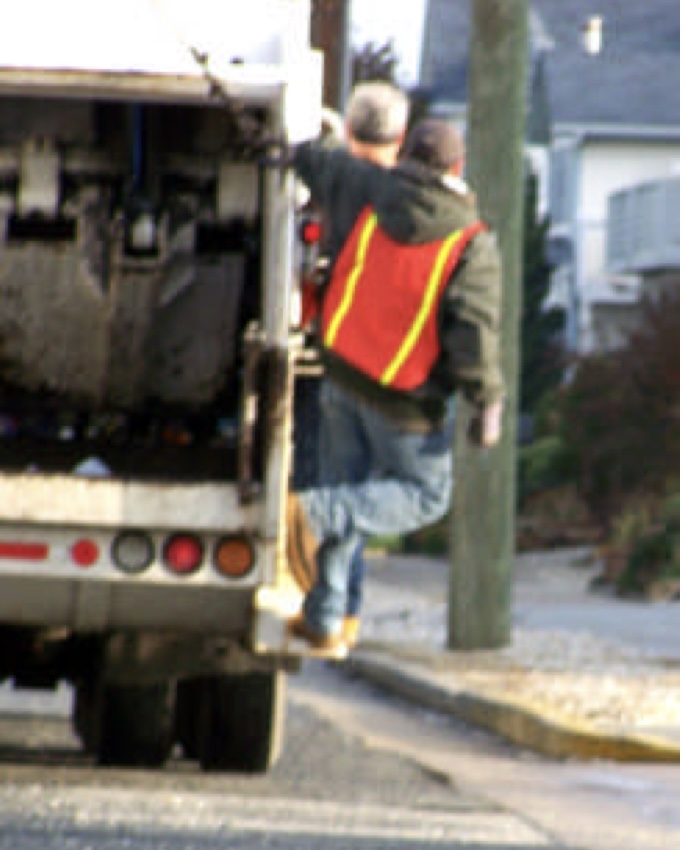
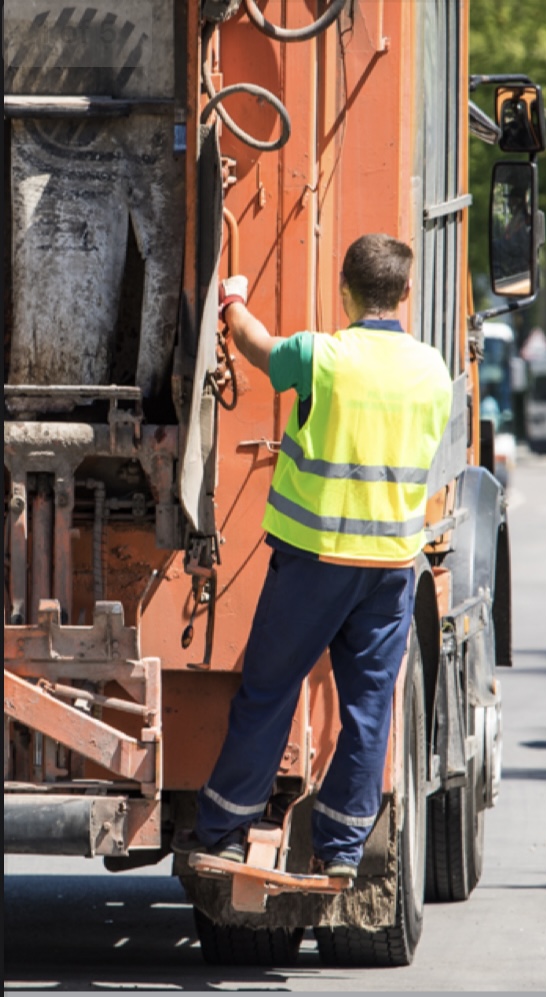
York Street was definitely a more dangerous setting for traditional trash pickup involving workers riding on the rear steps of rear-loading trucks; and a much better candidate for the only single-operator, automated garbage truck the city owned and operated at the time. But for whatever reasons, one of the three older style models was operating on that stretch of road, and an inexperienced 17-year-old minor working at a seasonal job happened to have been improperly assigned the task of riding the rear step and assisting with unloading trash bins.
Later that evening, at the tail end of the Council’s regular meeting, Mayor Rick Osbon asked again that the city “hold our young employee who was injured today in our prayers and his family, and the crews who were working with him.”
The Mayor’s comments followed a brief tribute to the city’s safety record, during which Mr. Bedenbaugh described payments back to the city from its insurance fund, the South Carolina Municipal Insurance and Risk Fund (SCMIRF).
“Mr. Bedenbaugh stated that ‘Aiken belongs to the Municipal Insurance Pool. The City received a surplus check of $144,689 due to the overall favorable performance of the city employees. We were notified that the City can expect to receive a check in June 2020 for $144,458. The City of Aiken was one of the founding members of the Insurance Pool in the early 1980s. It has paid dividends a lot of years…,I would like to complement our Risk Manager, Lex Kirkland, and our supervisors and department heads. They take safety seriously.”
If there were any objections from Council to the lauding of the city’s safety record on the day of an accident in which the City’s safety system clearly failed at a massive scale, the meeting minutes and video of the meeting do not reflect concerns about the contrasting messages.


Nearly five years after the insurance rebates were announced, and four years after lawsuits were filed, Attorney David Morrison, who is representing the city but is apparently being paid by SCMIRF—which has a coverage limit of $1 million per claim and can rescind legal defense if that limit is reached (2)— filed a Motion for Summary Judgement in the Hartley vs City of Aiken cases.
The Motion came more than four years after the two Complaints that were filed by Kyle Hartley’s parents, Kristi and Keven Hartley, who sought redress through the courts for lost income, medical expenses, and mental anguish; with their attorney Jason Samuels (of the Samuels Reynolds Law Firm of Columbia) contending that:
“Plaintiffs [have] also suffered extreme mental anguish from the moment [they] became aware of [their] son’s accident and medical condition, watching as [their] son has endured the amputation of his right leg, many surgeries and during the process of caring for [their] son and making medical decisions directly effecting [their] son’s future.”
Morrison made four short arguments, written entirely in capital letters, in support of its Motion for Summary Judgement:
- The Plaintiffs cannot establish that their claims of harm from emotional distress were caused by the City’s actions.
- The City is protected by sovereign immunity.
- The state’s Worker’s Compensation Act prohibits the Hartleys from recovering damages.(3)
- There was no “objective significant physical injury as a result of the alleged emotional distress” to support their claims.
(The Motion was scheduled to be heard on August 21, 2024, but was continued until the next available date.)

From Prison Labor to Modern Trash Collection
In many ways, the Hartley case is more than eight years old; beginning at the end of the City’s decades of access to cheap, almost free, state prison labor for use in garbage collection. That reliance on prison labor was, arguably, one root cause of the Hartley accident. (4)
In March 2016 the State Department of Corrections announced it would be closing the Lower Savannah River Early Release Center on Wire Road. The Center had long provided prison labor to local governments for use in menial tasks such as litter pickup, sorting at the City of North Augusta’s recycling center, cleanup at the Aiken County Animal Shelter, landscaping and grounds maintenance, and riding the back of rear-end loading garbage trucks for the City of Aiken’s public works department. In total, approximately 100 early-release inmates worked across the county; 35 of which worked for the City of Aiken.
The cost to the City was $15 per day, or about $4,000 per worker per year, amounting to less than $25,000 for the four to six inmates used daily for trash pickup and less than $100,000 for the eighteen inmates who worked on landscaping operations. The replacement cost for hiring ten temporary workers for the entirety of Public Works was about $250,000–a figure that included replacing the inmates with only ten temporary workers. Instead of hiring full-time workers, the City opted for the next cheapest option to prison labor—which also guaranteed a less experienced workforce and chronic labor shortages.
For the next three years following the work release center closing, the City slowly charted a path forward from the prison labor workforce model to a safer, modern model involving robotic garbage trucks.
Kyle Hartley got caught in that transition from three-person trash collection crews involving prison-labor to a single-operator system utilizing automated garbage trucks. The labor shortages wrought by the use of low-paid temp workers contributed to the misguided decision by city management to place him in the knowingly dangerous position on the back of a garbage truck; one known to have a high rate of workplace fatalities as well as chronic injuries.
Hartley was a 17-year-old minor hired as a seasonal worker in the Public Works Department; what was to be a summer landscaping job before heading off to college. At the time of his hiring, there was only one single-operator truck and 3-4 rear-loading trucks requiring manual operations from a crew riding the rear of the truck.
When he was assigned to garbage truck duties in defiance of parental guidance, the hazards of riding on the back of rear-end loading trucks were well established; yet he was told to ride on the back of a truck without any training.
The small fleet of three new, remote-loading, single-operator trucks arrived just a few months after he suffered his debilitating injuries.
According to the meeting minutes for work sessions from 2016 to 2019, City Council and City staff discussed and debated the merits of upgrading the garbage truck fleet versus staying the course. The former Public Works Director Tim Coakley urged the latter, while former City Manager John Klimm was the first to advocate for the former. Following are the highlights of those meetings. In all but a few cases when Klimm was manager, the discussions centered on costs and efficiencies, not safety.
May 9, 2016: City Manager John Klimm discussed an operational audit of the Public Works department, stating that “we are just about to get into another round of purchase of garbage trucks, and the question is whether this is the time for us to take a look at some of the technological changes that have occurred over the last 5 or 10 years such as robotic trucks and that type thing. With the news about the possibility of losing the inmates, we have an even more interesting aspect. The first phase of the study, which is in draft form, does show there would be cost savings. There would not be huge cost savings because the new trucks cost a lot of money.”
Public Works Director Tim Coakley explained how “the state had closed us off from inmates a couple of weeks ago and shipped them to the Trenton (correctional) facility,” and that “$250,000 had been placed in the Public Services budget for temporary labor for next year.”
City Manager Klimm described the status of the Public Works audit, describing again how, “Many, many areas across the country have gone to robotic trucks…He said we have three people on each truck currently while other areas have one person on the robotic trucks. He said the bottom line is there was merit in looking seriously at robotic trucks. The savings were relatively modest, but when you put in the fact that inmates are not going to be available anymore, then it substantially changes things.”
Public Services Director Michelle Jones made the case that the City should take a phased approach to upgrading to robotic trucks that require only one driver-operator. She also raised the issue that modern automated trucks “would eliminate two potential risks” by replacing three-person crews per truck and going to one person per truck.
John Klimm also spoke about safety, stating that “traditionally worker’s comp claims are high for cities for garbage collection employees, but this is not the case in Aiken at this time, but could be in the future…there is concern about the present system where two employees hold on to the back of the truck. There is concern about their safety.”
Council opted to add the purchase of a single robotic garbage truck to the budget.
There was another discussion about the garbage collection labor situation and the existing fleet of trucks; with complaints regarding increased labor costs continuing two years after the loss of prison labor. The discussion focused on efficiency and costs.
At one point, Councilman Dewar asked about the experience with the single-operator automated truck. City Manager Stuart Bedenbaugh replied that “it is working, but City-wide, it would be difficult to implement because of some of the tight spaces in older neighborhoods with a lot of old-growth trees and above-ground utilities.”
Mayor Rick Osbon then stated the single-operator trucks “work in Aiken Estates and Gem Lakes;” two neighborhoods with substantial tree canopies.
At the end of the discussion, Tim Coakley stated that he “would not recommend purchasing another single-operator truck. “
Safety was not a reported topic of discussion.
Tim Coakley addressed the single-operator system, stating, “It has not performed as staff would like. There have been several breakdowns in the first year…there are a lot of neighborhoods where the one-man truck cannot be used.” He pointed out that the truck “cannot run in Kalmia Hill as it is too tight and there are a lot of cul-de-sacs.” He also described residents “not putting cans out correctly” as another disadvantage for a single-operator system.
When Councilman Ed Woltz inquired as to the cost of new equipment, City Manager Bedenbaugh responded with a figure of $1.4 million.
City Manager Bedenbaugh informed Council that there were enough funds in the Depreciation Account to replace four trucks. The subsequent budget approved for Fiscal Year 2019-2020 contained funding to buy four new single-operator, automated garbage trucks.
One week into the new budget year, Kyle Hartley suffered his injury while riding on the back of one of the old garbage trucks.
July 8, 2019:
Mention is made of the Hartley accident and injuries, with thoughts and prayers offered.
November 25, 2019:
Lex Kirkland, who had recently replaced Tim Coakley (5) as the Public Works Director, told Council that three new single-operator trucks had been purchased and were in use, and that “the process is getting faster every day. (Crews) hope to pick up more than they were able to pick up with the rear loaders as they get used to them…citizens are becoming accustomed to putting the cans out correctly.”

Footnotes
(1) The case file in sccourts.org is skimpy. For example, there are no portions of the deposition transcript associated with any Motions, and there are no Memorandums in Support of or in Opposition to the May 2024 Motion for Summary Judgement. The most recently scheduled hearing was deferred to a future date.
(2) Like many other personal injury cases asserting negligence or other undue actions on the part of the City, injured parties are more likely to face its insurer, South Carolina Municipal Insurance and Financing Fund (SCMIRF).
SCMIRF, though, is not actually insurance, nor is it subject to state insurance laws.
The City of Aiken’s insurance coverage for property and liability through SCMIRF is described in the city’s policy as:
“a statutory pooled self-insurance liability fund established pursuant to Section 15-78-140 of the South Carolina Code and by intergovernmental agreement. By statute, SCMIRF is not insurance, nor is it subject to state laws regulating insurance. Nevertheless, Section 15-78-140 requires SCMIRF to provide multiple lines of coverage.”
The following question was posed during a February 2023 City Council meeting following the publication of an Aiken Chronicles update on the case.
“Who pays the attorney costs for these personal injury cases against the city? Is it the insurance company or is the city? Is it the insurance companies that hire the lawyers for personal injury cases that are going to involve possible settlements greater than a hundred thousand dollars?”
City Attorney Gary Smith answered,
“Don’t hold me to this. The city manager would be able to answer this question better than I can. But we do have insurance through the municipal Insurance risk fund and there are cases from time to time where they will take up the cost of litigation and they’ll take up the cost of the Judgment if there is one. There are some cases where the city has to fund its own legal expenses. I believe this is one being funded by MIRF but I can’t promise you that.”
A FOIA request for all of David Morrison’s legal invoices to the City of Aiken for 2022 and most of 2023 revealed no billings for the Hartley case. SCMIRF is clearly picking up the bill.
This makes perfect sense, as the City’s insurance policy states that “SCMIRF has the right and duty to defend any Suit asking for Money Damages.” (below)

The General Conditions clause further states that “it is agreed that SCMIRF shall make all final decisions regarding the legal defense of claims, regardless of whether the Member elects alternative premium financing option, including but not limited to a deductible or individual self-insured retention.”
What is unclear is to what extent SCMIRF has the final say on settlements.
A major settlement or jury award could temporarily trigger the end of SCMIRF’s duty to defend or settle future lawsuits. According to the City’s 2022 Insurance Coverage document, “SCMIRF’s liability for any one Incident is limited to $1,000,000 per Member.”
As reported in Fencing After the Fact, the City’s self-insurance is for up to $100,000 per incident.
The City of Aiken should identify its role in the decision-making on a final settlement should be identified.
Should the case go to jury, the City and SCMIRF are undoubtedly aware that two recent jury awards to prisoners injured while at the Aiken County Detention Center have added up to $1.1 million. Jurors are much more likely to be symphathetic to the plight resulting from horrific workplace injuries suffered by a healthy, 17-year seasonal landscape work unnecessarily performing dangerous trash collection duties.
(3) The Civil case has crawled through the judicial system for more than four years while Kyle Hartley’s concurrent, complex worker’s compensation case was litigated.
SC Worker’s Compensation law, SC 42-9-10, requires workers with “total disability” to receive two-thirds of average weekly wages for up to 500 weeks. If the disability is partial, it would be for up to 340 weeks.
If the injured worker becomes paraplegic or quadriplegic, or who has suffered from brain damage, then the benefits are for life.
No matter what the case, the benefits for Kyle Hartley would be scanty.
If his wage was the current starting pay of $11.50 per hour, a worker’s compensation payout would be only an estimated $308/week.
If his wage was ~$9.50 per hour, which was typical at the time, the payout would only be $254/week, or merely as much as $125,000 and as little as $86,000 for the loss of a leg while performing work for which he was no trained.
(4) The prison labor practice was not without similar safety problems, as this lawsuit in federal court in 2009 suggests.
(5) Coakley left the city’s employment role. He was named as a Defendant in the Hartley vs City of Aiken lawsuits, but later dismissed.