
By Laura Lance
September 10, 2023
It is September — sand pear season! For those unfamiliar with sand pears, these hard, gritty fruits are an old-fashioned favorite among southerners who appreciate their unusual qualities, not the least of which is the tree’s habit of thriving in southern climates. Over the years, I’ve taken many photographs and journaled about the two sand pear trees in my mother’s yard. Below is a collection of entries from recent years.
First Day of Spring 2014
Our old pear tree is in full flower this week. This is one of two trees that my mother and father planted in the late 1970s.


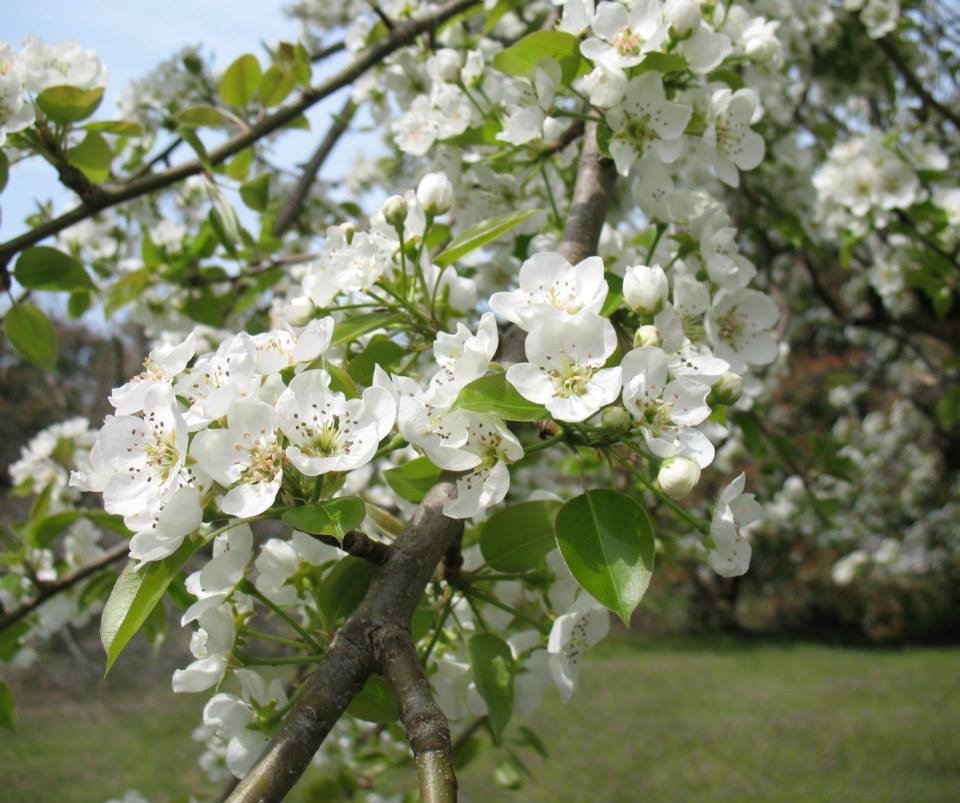
Pear blossoms and blue skies
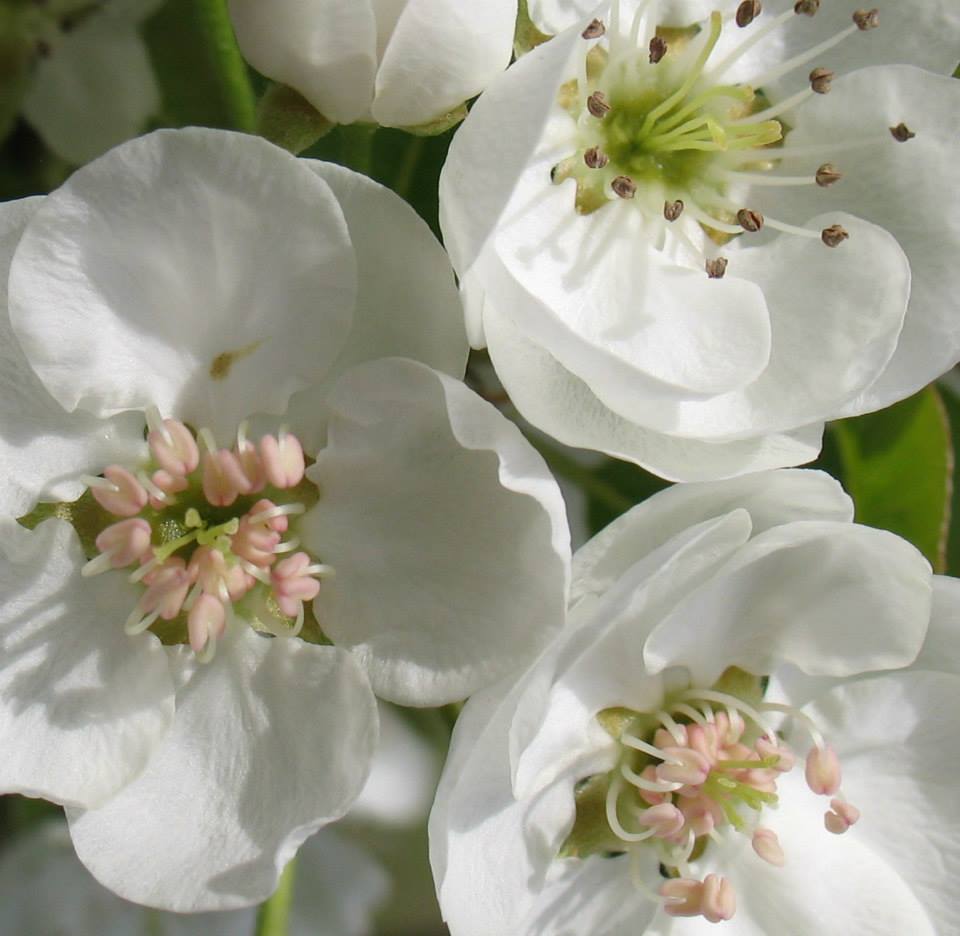
Lovely, ethereal and sensual, pear flowers open in the morning, their stamens unfurling to reveal pink, fleshy anthers.

Within hours, the pollen bursts from anthers, ready to be carried by visiting bees to the flower’s center, to the pistils, which elongate in anticipation.

Mason bees and other native pollinators hard at work.

Once the pollen is released, or dehisced, the anthers shrivel and turn brown. By the next morning, the petals will have fallen.

Already, the ovary of the fertilized flower is swelling, becoming a pear. If a late frost doesn’t kill the budding fruit, they will grow and, come May, the tree will be filled with hundreds of perfect young pears.


The sand pear in late May.
Late Summer 2015
This type of pear (Pyrus pyrifolia) goes by a number of names — sand pear, Asian pear and apple pear, to name a few. By nature, these trees sometimes age into ungraceful poses– their bare branches resembling, in winter, the collapsed staves of a broken umbrella. In late summer these limbs bear the weight of hundreds of hard, delicately flavored pears.

The fruits have a long harvest season, remaining persistently hard throughout. They never grow soft, like a Bartlett pear, nor do they attain that level of sweetness. They become edible in late July, but are better once the begin to fall to the ground in August and September.

The sand pear in late July.

As the possums, deer, raccoons, fire ants and yellow jackets can attest, this is when the pears are ripe for eating.
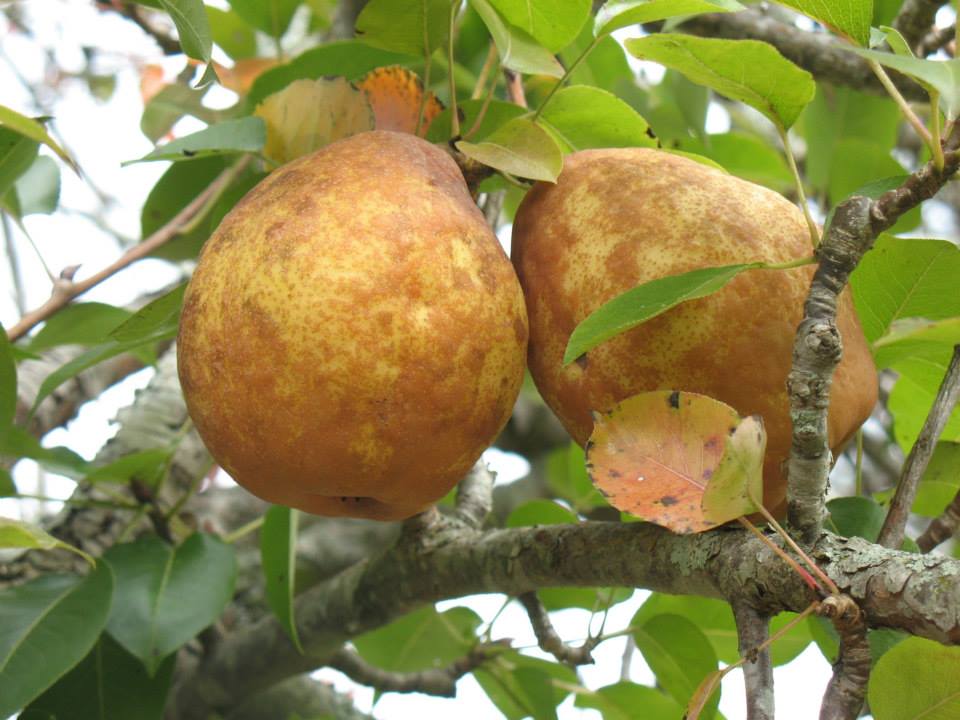
Most years, we’ve had have a bumper crop of sand pears. Hard, crisp and mild-flavored with a satisfying grit for pear lovers, these pears are similar to, but a little different from the Asian pears you buy at the grocery.
They are good eaten out of hand or made into relish and chutneys. If you had a grandmother or great-grandmother who lived in the south from the 1970s back, she likely had a recipe for pear relish in her recipe box.

Sand pears are also wonderful sliced into green salads with a lemon-poppy dressing. They also taste wonderful sliced and dipped in sea-salted caramel on a cool fall evening.


My mother and father never cared much for the fruit, so every year, they invited old timers over to harvest them. The old timers would leave with baskets and boxes filled with sand pears and, in return a few weeks later, gift us with a few jars of pear relish – a savory southern delicacy served atop meats, greens and other vegetables. As the old timers passed away, so did the gifts.
Fire Blight, Wind and Frost 2016-2019
For a few years, it seemed the late frosts, wind storms, and fire blight had finally taken their toll. The leaves were black from fire blight. Late frosts kept killing the fruit. Major limbs had been broken and were hanging lifeless from the trees. There was talk of cutting the trees down, but I refused, preferring to allow them a natural death. I spent these years saying my goodbyes.
October 2017: Ah, our beautiful pear trees! The last two springs have brought late spring frosts that killed the young pears. The trees are near the end of their life span, so I don’t know if we’ll ever see another big crop, but I do dream about them.
October 2018: Has it been only 3 years? My, the things time changes as it flies.
March 2019: Storms and age have taken their toll over the years, and there is little left to them but broken, bare branches falling one by one back to the earth…. The memories are pretty sweet. I’m glad I have the old photos.
September 2019: Gosh, has it been only 4 years? The pear trees finally succumbed to the fire blight and the late spring freezes. But what lovely memories they left in their wake. Gather ye rosebuds while ye may….
Late Summer 2020
So imagine my surprise when I happened to be in that part of the yard one morning and, glancing over, saw the trees all green with leaves and with hundreds of pears on the trees. I felt like celebrating!


I made an apple pear pie to celebrate the 2020 crop. I was sick with Covid that year and forgot to take a picture of the finished pie. We’ve enjoyed a crop every year since.

The pears are, of course, fewer these years. The ground would usually be covered with half-eaten pears by now, but there were only three pears on the ground when I took this picture last week.

I picked my first pear that same day.

If the pears seem a little sweeter this year, that’s the memories talking.

Throughout autumn, the pears will continue to fall until, perhaps, late November…

…when the very last pear will fall.

Come spring, the flowers and bees will return, ready for an encore.