by Don Moniak
May 3, 2023
This past Monday a dust storm originating from a Great Southern Homes residential development impacted a small but not insignificant part of North Aiken.
Great Southern Homes is a widespread regional developer specializing in new residential construction. On its website the company describes itself as “one of the Southeast’s leading homebuilders;” and its news section features numerous awards.
Among Great Southern Home’s advertised developments is Portrait Hills, a planned subdivision of 146 homes on ~41 acres in the 1200 block of Edgefield Highway in North Aiken. It is described by the company as follows:
“Welcome to Portrait Hills, Great Southern Homes newest community located in the beautiful city of Aiken. This community features spacious homesites, picturesque wooded views and our most popular, award winning floor plans.”
In November of 2021, Aiken City Council approved incentives for the development for up to $112,000 under the city’s Economic Incentive Program created in 2018. The property has subsequently been clearcut and graded in preparation for the subdivision of 146 homes. The “wooded views” advertised by the company will have to derive from adjacent properties like the picturesque Great Oaks of Aiken Therapeutic Riding Center.
While the economic incentive did not produce the dust storm, the fact that the City of Aiken helped fund the development reflects poorly on the city’s economic incentive program. While the developer has installed a pleasant entrance sign where it has planted some sapling trees and shrubs, no dust abatement measures or signs of the city’s tree preservation policy were evident
The Dust Storm
On May 1, 2023, an unusual dust storm—for a humid region (1)—originating from the clearcut, site-prepped Portrait Hills development (2) swept across the 1200 block of Edgefield Highway (HWY 19 North). The sandy dust blew despite the area being adorned by more than 10 inches of rain since the last week of March.
During the day-long event, a strong westerly wind with gusts greater than 20 miles per hour, not atypical for Aiken spring weather, blew ground and low-level clouds of fine grained sandy dust across the barren site-prepped area, and across Highway 19.
Visibility on the well-traveled truck and commuter route was negatively impacted; and anyone driving with their windows down was subject to sand blasting the inside of their vehicles. Anyone walking on the well-used sidewalk was subject to respiratory impacts as well as general discomfort. The sandy waves of dust impacted a recently renovated home, and the historic Northside Barbershop plaza. Workers on the site were subjected to the nearly constant blowing dust. (photos below by Don Moniak, 5/1/23)


If an equally strong wind had been from the north, the Grand Oaks neighborhood, of which Portrait Hills is considered an extension, would have felt the brunt of the sandy dust. If it had been directly from the south, the older neighborhood of Balltown would have felt the brunt of the dusty sand. (below, Aiken County Land Database map)

Aiken County, DHEC, the City of Aiken and its Engineering Department were all notified of the situation, Within ten minutes, the city’s Engineering Department took ownership of the situation and promised to investigate. Any subsequent actions have yet to be reported, and dry conditions and strong winds were predicted through Wednesday.
Despite strong, persisent winds and dry air, no other dust was visible on HWY 19 from the 1200 block to north of Exit 18 off Interstate 20. The similarly-sized and River’s Crossing subdivision outside city limits, and also in site-prep and early development mode, had a layer of grass and scattered straw protecting the bare soil underneath. (below, photo by Don Moniak, 5/1/23) . River’s Crossing was also mostly nonforested prior to the development.

There is one other difference between River’s Crossing and Portrait Hills, which is the latter’s six-figure economic incentive agreement with the City of Aiken:
- On October 12, 2021, the Aiken Municipal Development Commission (AMDC) passed a resolution to recommend that City Council approve an incentive agreement worth up to $112,000 on October 12, 2021.
- On November 8, 2021 Aiken City Council approved an ordinance to provide “certain economic incentives’ for the Portrait Hills subdivision, and only identified Great Southern Home’s land development manager Jesse Bray as the developer. The incentives were worth up to $112,000, or half of the anticipated permit fees, business license fees, and utility costs. According to the ordinance, site development was expected to take 9-18 months, and housing construction up to four years.

The stated benefits of the annexed development— like all developments in the program—included increased property tax revenue, increased utility customers, “greater amenities for the city’s residents, and increased tourism. “
__________________
Footnote:
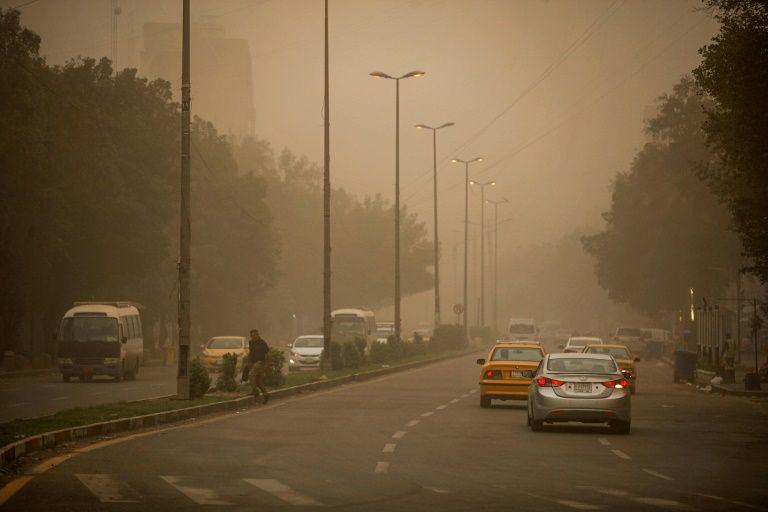
(1) Dust storms are relative to a region. Most dust storm images are from the arid and semi arid Western states, and feature billowing dense massive clouds of dust with almost zero visibility. In more humid regions, heavy dust at a smaller and more localized scale can and has been described as a dust storm, as the photo below of an Illinois duststorm shows.
The differences are akin to wildfires, with the dominant images being from the Western U.S,. But the Southeast is still prone to intense, smaller wildfires that can and have destroyed entire neighborhoods—which the South Carolina Forestry Commission reminds people of annually.

(2) Though not identical image locations, Pictometry images from Aiken County’s land database show the contrast in recent conditions versus current conditions. The top photo is from January to March, 2021 the bottom is dated January, 28, 2023.
Great Southern Homes’ Portrait Hills Webpage lists “Green Spaces” as an amenity.